

Book a Service Today
Choosing the Right Septic Installation Service in Arapahoe County: A Homeowner's Checklist
![[HERO] Choosing the Right Septic Installation Service in Arapahoe County: A Homeowner's Checklist](https://cdn.marblism.com/R2Gw5Zx7ihJ.webp)
Installing a new septic system is one of the most significant investments you will make in your property. Unlike a standard repair, a Septic Installation involves complex engineering, environmental compliance, and heavy machinery. In Arapahoe County and surrounding Front Range communities, the geological diversity: ranging from dense clay to rocky terrain: adds another layer of complexity to the process.
Choosing the wrong installer can lead to more than just a bad smell; it can result in groundwater contamination, property damage, and legal fines. To help you navigate this process, we have compiled a professional checklist to ensure you hire a contractor capable of delivering a long-lasting, code-compliant solution.
1. Verify State and Local Licensing
In Colorado, septic systems (On-site Wastewater Treatment Systems or OWTS) are strictly regulated. A reputable installer must be familiar with the specific requirements of the Colorado Department of Public Health and Environment (CDPHE) and individual county health departments.
When interviewing a contractor for your Septic Installation, you must verify the following:
- Active Colorado License: Ensure they are licensed to operate in the specific county where your property is located (e.g., Jefferson, Adams, or Arapahoe).
- Insurance Coverage: The contractor must carry general liability insurance and workers' compensation. This protects you from being held liable for accidents that occur on your property during the heavy excavation phase.
- Bonding: A bonded contractor provides an extra layer of financial security, ensuring that the project will be completed according to the terms of the contract.
2. Evaluate Experience with Arapahoe County’s Unique Topography
The "Front Range" is not a uniform landscape. A company that successfully installs systems in the sandy soils of eastern Colorado may struggle with the high-water tables or rocky slopes of the foothills.
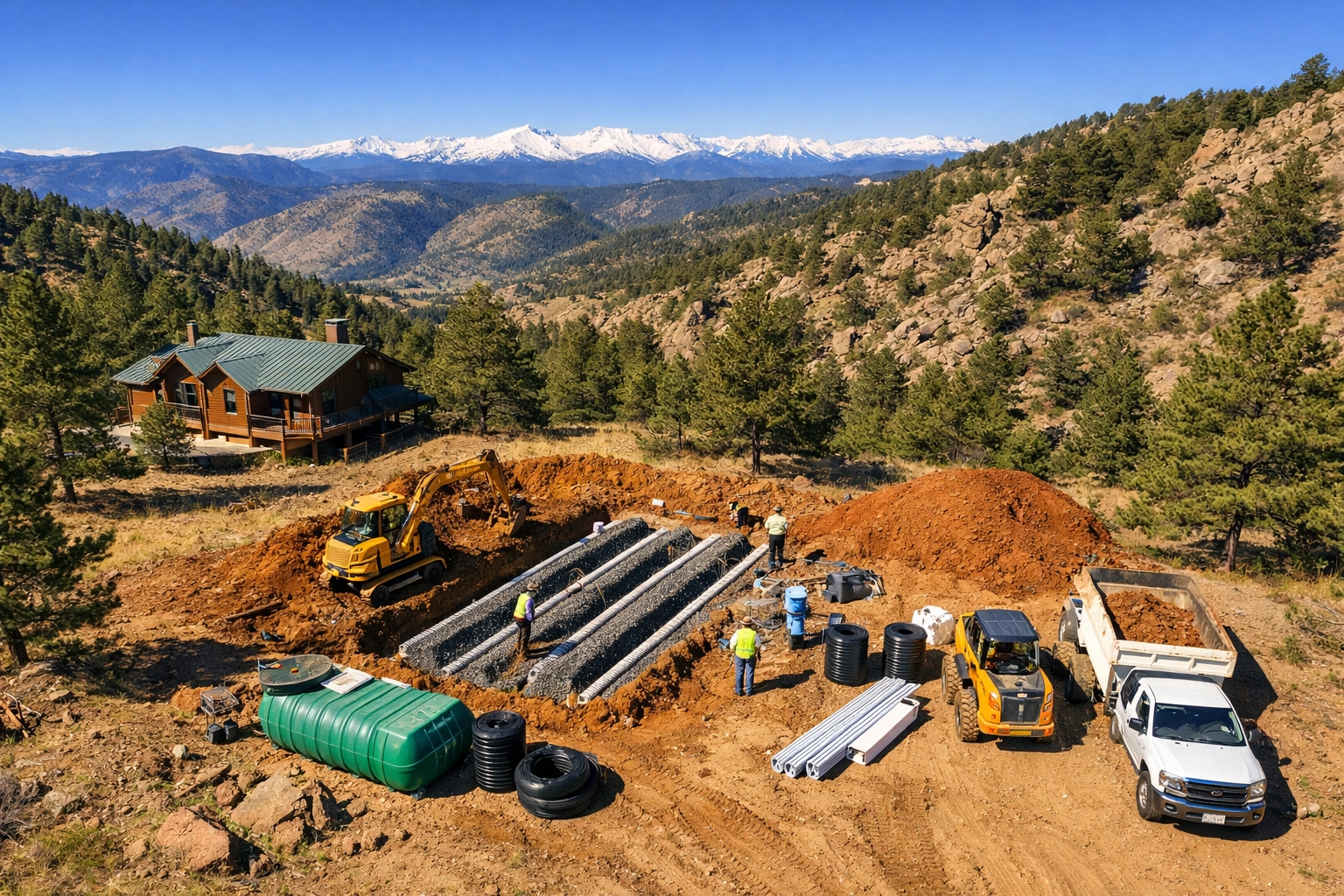
A professional installer should demonstrate:
- Geological Knowledge: They should understand how Arapahoe County’s prevalent "expansive soils" (bentonite clay) affect the stability of a septic tank and the absorption rate of a leach field.
- Topographical Planning: For properties in areas like Golden or Lakewood, installers must account for slope and gravity. If the terrain doesn’t allow for a standard gravity-fed system, they must be experts in installing pump-to-gravity or pressure distribution systems.
- Local Portfolio: Ask for examples of completed projects in your specific neighborhood. A company familiar with Arvada or Wheat Ridge will likely have an established relationship with local inspectors, streamlining the approval process.
3. Comprehensive Site Evaluation and Sizing
A "one-size-fits-all" approach is a red flag in the septic industry. The system must be custom-sized based on your home's potential occupancy and the soil's ability to process effluent.
Key Technical Highlights for Sizing:
- Bedroom Count: Septic systems are typically sized by the number of bedrooms, not bathrooms. A professional will calculate the daily design flow(usually 150 gallons per day per bedroom).
- The Percolation (Perc) Test: Before any digging begins, a soil technician or engineer must perform a perc test. This determines the Infiltration Rate. If the soil drains too slowly (clay) or too quickly (coarse gravel), the installer must design a specialized "engineered system."
- Future-Proofing: Discuss any plans for future home additions. It is much more cost-effective to install a slightly larger tank now than to replace the entire system five years later.
For homeowners transitioning from older systems or dealing with limited space, we often recommend exploring trenchless pipe solutions for the connection lines to minimize yard disruption.
4. Technical Expertise in Modern Septic Components
Septic technology has evolved significantly. A modern Septic Installation should include high-quality components that prioritize longevity and ease of maintenance. Ensure your contractor is proficient with:
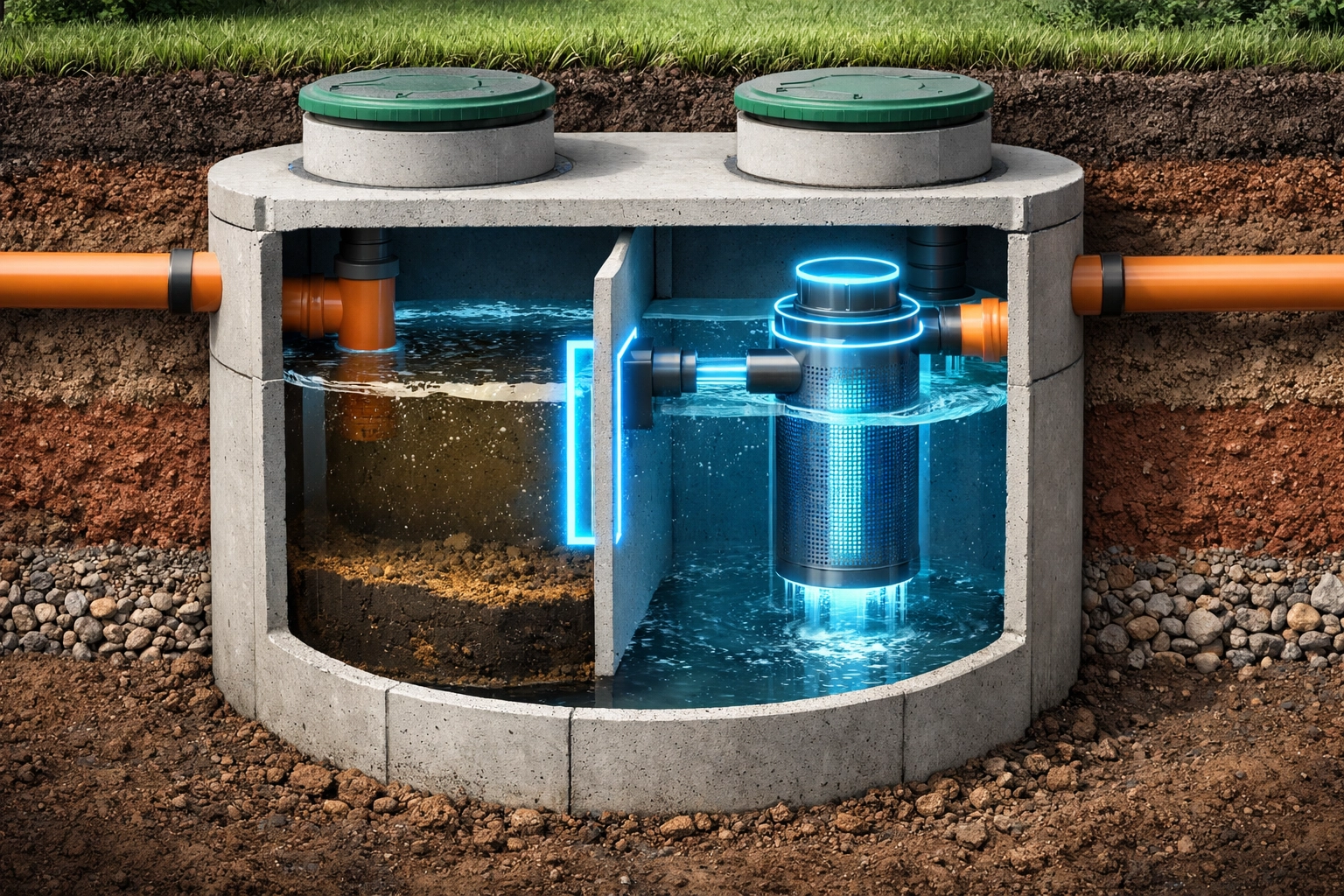
- Two-Compartment Tanks: These are now the standard, providing superior separation of solids and liquids compared to older single-compartment designs.
- Effluent Filters: A small but critical component installed at the outlet of the tank. It prevents fine solids from entering and clogging the leach field: the most common cause of system failure.
- Risers and Lids: A professional install includes risers that bring the tank access to ground level. This eliminates the need for future excavation just to perform a routine pump-out.
- Advanced Treatment Units (ATUs): If your property has poor soil or is near a sensitive water source, you may need an ATU. This "mini-treatment plant" cleans the effluent to a much higher standard before it reaches the soil.
5. The Permitting and Inspection Process
Navigating bureaucracy is often the most frustrating part of a Septic Installation. A full-service provider should handle the heavy lifting regarding paperwork.
The Workflow Should Include:
- Site Application: Submitting the initial design and soil reports to the county.
- Permit Acquisition: Obtaining the legal right to begin construction.
- Open-Hole Inspection: Most counties require an inspector to view the system while the trenches are still open and the tank is visible before backfilling.
- Final As-Built Drawing: Once the job is finished, the contractor should provide you with a map showing the exact location of the tank and lines for your permanent records.
6. Transparent Estimates and Warranties
Avoid contractors who give "ballpark" figures over the phone without visiting the site. A professional estimate should be detailed and transparent.
Checklist for Estimates:
- Excavation and Backfill: Does the price include the cost of moving dirt and returning the site to a "rough grade"?
- Permit Fees: Are county fees included or billed separately?
- Component Brands: What type of tank (concrete, plastic, or fiberglass) is being used?
- Labor Warranty: Most reputable Arapahoe County installers offer at least a 1-year to 5-year warranty on workmanship. At Denver Sewer Pros, we believe in the quality of our residential installations and stand behind our work.

7. Post-Installation Support
A septic system is a living biological environment. The relationship with your installer shouldn't end the moment the dirt is smoothed over.
- Maintenance Schedules: Does the company offer a maintenance plan or remind you when it's time for a pump-out (typically every 3–5 years)?
- Emergency Services: If an alarm sounds on your pump system at 2:00 AM, will they be there to help? We provide comprehensive services across the metro area, including Aurora and Westminster, ensuring you’re never left in a bind.
- Owner Education: A good contractor will walk you through the "dos and don'ts," such as avoiding chemical drain cleaners and keeping heavy vehicles off the leach field.
Frequently Asked Questions (FAQ)
How much does a new septic installation cost in Arapahoe County? Costs vary widely depending on soil quality and system type. A standard gravity system may range from $10,000 to $20,000, while engineered systems for difficult terrain can exceed $30,000.
How long does the installation process take? The physical installation usually takes 3–5 days. However, the permitting and soil testing phase can take several weeks depending on the county's backlog.
Can I install my own septic system? In most Colorado counties, septic systems must be installed by a licensed professional to ensure they meet environmental and safety codes. DIY installation can lead to the denial of a "Use Permit," making it impossible to sell your home later.
What is the lifespan of a new septic system? With proper maintenance and a high-quality installation, a modern septic system can last 25 to 40 years.

Secure Your Property’s Future with Expert Installation
A septic system is the silent backbone of your home’s infrastructure. When done correctly, you’ll never have to think about it. When done poorly, it becomes a recurring nightmare. At Denver Sewer Pros, we bring technical precision and local expertise to every project, from High-Pressure Hydro-Jetting to full-scale system replacements.
Whether you are building a new home in Longmont or replacing an aging system in Greenwood Village, we provide the peace of mind that comes with professional execution.
Don't leave your wastewater management to chance. Contact Denver Sewer Pros today for an expert evaluation and a long-lasting solution for your septic installation needs.
Nathan Fairchild
CEO, Denver Sewer Experts
Website:
denversewerpros.com
Email: admin@denversewerpros.com
Phone: (720) 364-4891