

Book a Service Today
Looking For a Grease Trap Installer? Here Are 5 Things Every Denver Business Should Know
![[HERO] Looking For a Grease Trap Installer? Here Are 5 Things Every Denver Business Should Know](https://cdn.marblism.com/swqJFuQfIdF.webp)
For restaurant owners and commercial kitchen managers in the Mile High City, the kitchen isn't just about high-quality ingredients and fast service, it’s about the infrastructure that keeps the business running. One of the most critical, yet often overlooked, components of that infrastructure is the grease interceptor or grease trap.
In Denver, grease trap installation isn't just a recommendation; it’s a strictly regulated requirement. Failing to install the right system, or hiring an inexperienced installer, can lead to massive municipal fines, environmental hazards, and catastrophic sewer backups that force your doors to close.
When you are looking for a grease trap installer, you aren't just hiring a plumber; you are hiring a compliance partner. Here are five essential things every Denver business owner needs to know before signing a contract.
1. Permits Are Non-Negotiable and Complex
One of the biggest mistakes a business owner can make is assuming that a grease trap installation is a simple "plug-and-play" task. In the City and County of Denver, any new, modified, or reconstructed grease interceptor requires mandatory permits.
Your installer must be intimately familiar with the Water Management Division (WMD) and the Department of Environmental Health. Before a single shovel hits the dirt, professional installers must submit:
- Complete architectural and plumbing floor plans.
- A riser diagram showing all waste line sizes.
- Detailed specifications of the interceptor unit itself.
If your installer suggests skipping the permit process or "worrying about it later," walk away. At Denver Sewer Pros, we handle the administrative heavy lifting because we know that an unpermitted trap is a liability waiting to happen.
2. Sizing Is Based on Math, Not Guesswork
You cannot simply pick a grease trap size based on what "looks right." Denver has very specific calculations to determine the required capacity of your interceptor. These calculations take into account:
- Turnover Rate: How quickly customers cycle through your establishment.
- Categorical Use Factor: The type of food you serve (a BBQ joint produces significantly more FOG, Fats, Oils, and Grease, than a sandwich shop).
- Peak Hour Meals: The maximum volume of service during your busiest time.
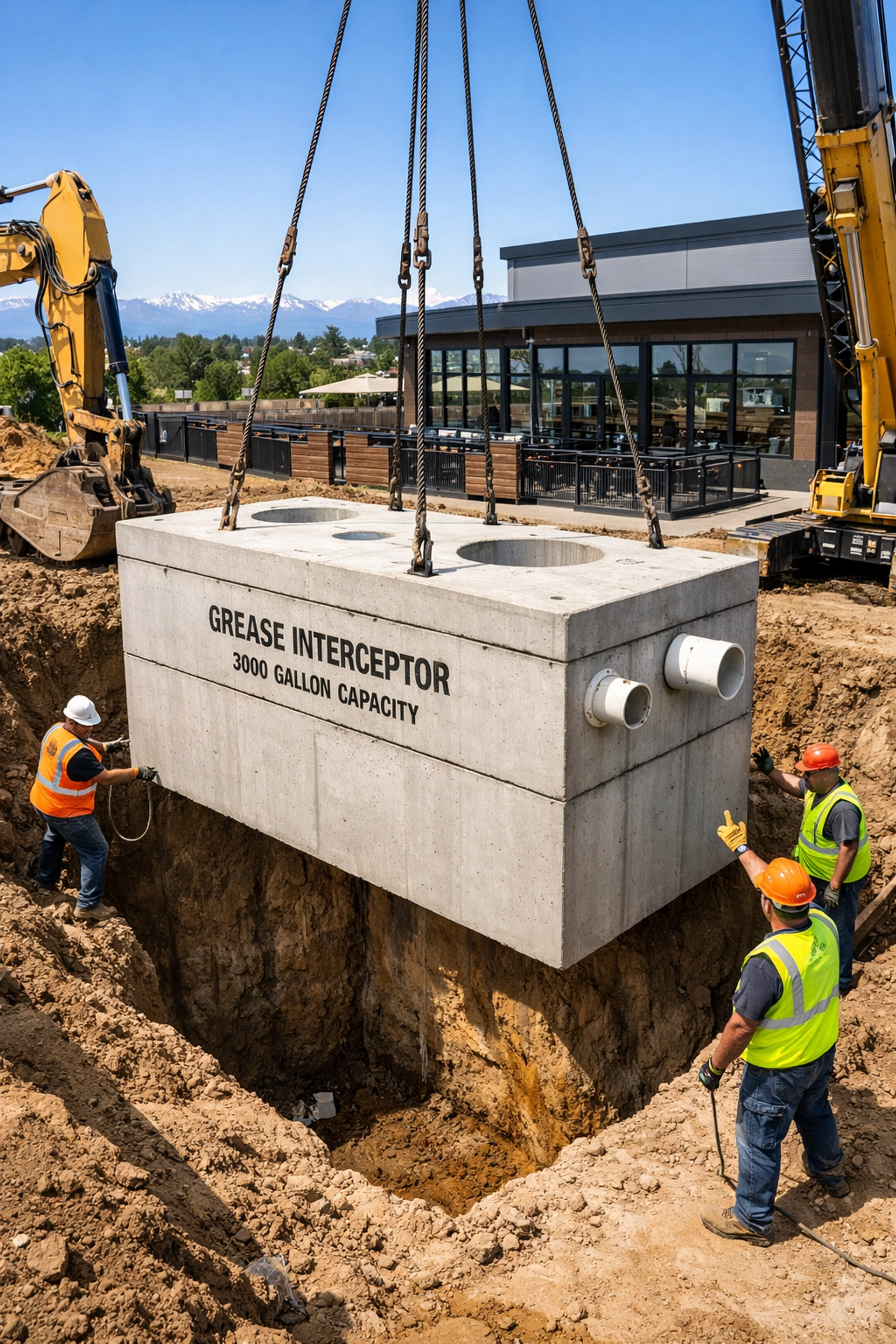
Crucially, Denver regulations generally require that gravity grease interceptors have at least a 750-gallon two-compartment capacity. Attempting to install a smaller, cheaper unit often results in a failed inspection and an order to replace it immediately. An expert installer will perform these calculations during the consultation phase to ensure your business stays compliant from day one.
3. Location Requirements: Exterior vs. Interior
Denver’s building codes are very specific about where a grease trap can be placed. Whenever possible, grease interceptors must be located outside the building, on private property, and below grade. This allows for easier pumping and maintenance without disrupting kitchen operations or risking sanitary contamination inside the food prep area.
Interior installations are generally prohibited in areas where food is prepared or dishes are washed. If your property’s footprint makes an exterior installation impossible, your installer must secure special permits from both the Building Inspection Division and the Department of Environmental Health.
Hiring a team like Denver Sewer Pros means you get an expert evaluation of your property to determine the most cost-effective and compliant location. Whether you are in Arvada or Aurora, we understand the local soil conditions and property layouts that dictate these decisions.
4. Integration of Kitchen Drains
A common point of failure in commercial kitchens is the improper routing of waste lines. For a grease trap to do its job, every drain that carries FOG must be connected to it. This includes:
- Pot sinks and pre-rinse sinks.
- Dishwashers (depending on temperature and chemical usage).
- Floor drains in food prep areas.
- Garbage disposals/grinders.
In Denver, it is a requirement that garbage grinders in food preparation areas feed directly into the grease interceptor. If these lines are mismanaged, grease will bypass the trap and solidify in your main sewer line, leading to "fatbergs" that cause backups. We often use high-pressure hydro-jet cleaning to clear existing lines before a new installation to ensure the entire system starts with a clean slate.
5. The "25% Rule" and Long-Term Maintenance
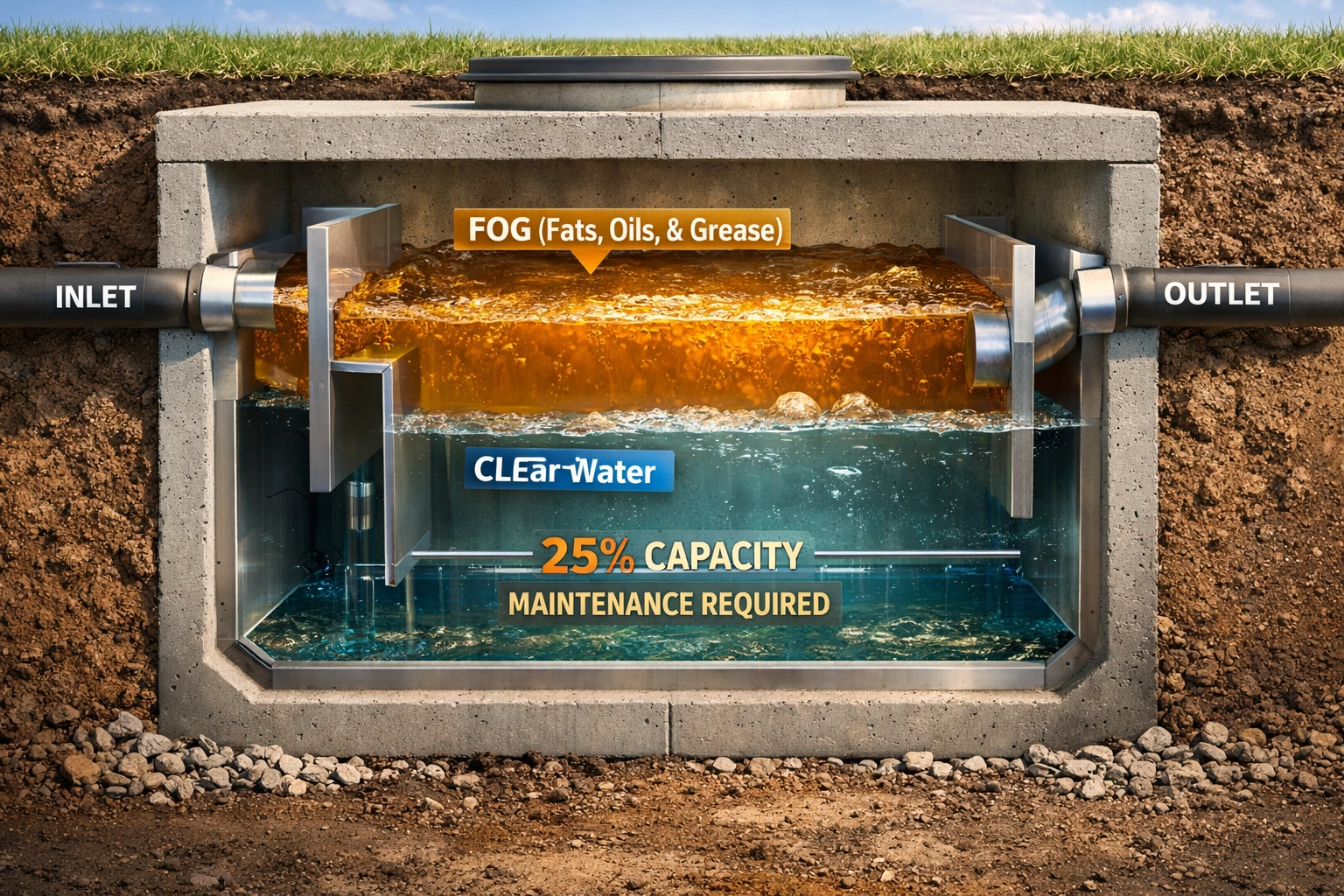
Your relationship with your grease trap doesn't end once the installation is complete. Colorado regulations are strict about maintenance. Grease traps must be pumped at least every three months, or more frequently if they reach 25% of their total FOG capacity.
A professional installer should provide you with a maintenance schedule and help you understand the reporting requirements for the city. If you fail to maintain records of your pumping, you risk hefty fines during routine health inspections.
Why Experience Matters for Denver Businesses
Choosing a local expert is about more than just proximity; it’s about specialized regional knowledge. Denver's utility infrastructure and specific municipal codes are different from those in Lakewood or Westminster.
What to look for in an installer:
- Licensing and Insurance: Ensure they are licensed specifically for commercial plumbing and sewer work in Denver.
- Transparent Pricing: Avoid "estimates" that don't include permit fees or excavation costs. A reputable company provides a clear, detailed quote.
- Equipment: Do they have the heavy machinery required for a 750-gallon exterior install?
- References: Ask for examples of other Denver restaurants they have serviced.
At Denver Sewer Pros, we specialize in commercial sewer services and residential sewer repair. We understand that for a business, time is money. Our goal is to provide a seamless installation that passes inspection the first time, allowing you to focus on your customers.
Frequently Asked Questions
Q: Can I install a small under-sink grease trap instead of a large exterior one? A: In most Denver commercial applications, under-sink (hydromechanical) units are only allowed if an exterior gravity interceptor is proven to be technically unfeasible. Even then, they require specific variances and more frequent cleaning.
Q: How long does a typical installation take? A: The physical installation usually takes 2–4 days, but the permitting and approval process can take several weeks. It is best to plan ahead, especially for new builds or major renovations.
Q: What happens if I don't install a grease trap? A: You will likely be denied an operating permit or a business license. If you are already operating, you face immediate closure by the health department and significant fines from the city’s wastewater department.
Q: Do you offer services outside of downtown Denver? A: Yes, we cover a wide range of service areas, including Wheat Ridge, Longmont, and Golden.
Secure Your Business with Expert Installation
Don't let a poorly installed grease trap become the bottleneck of your business. From navigating complex permits to precise sizing and professional excavation, Denver Sewer Pros is your partner in compliance and operational efficiency.
Whether you're opening a new bistro in Greenwood Village or upgrading an old kitchen in Edgewater, we bring the expertise you need for a long-lasting solution.
Ready for an expert evaluation? Contact Denver Sewer Pros today at denversewerpros.com and ensure your kitchen is built to last.
Nathan Fairchild
CEO, Denver Sewer Experts
Website:
denversewerpros.com
Email: admin@denversewerpros.com
Phone: (720) 364-4891