
Book a Service Today
Trenchless Vs Traditional: Which Is Better For Your Denver Sewer Repair?
![[HERO] Trenchless Vs Traditional: Which Is Better For Your Denver Sewer Repair?](https://cdn.marblism.com/k52WECjRwdp.webp)
If you are a homeowner in the Denver metro area, the words "sewer line failure" are enough to ruin your week. Whether you’re dealing with a slow drain in Wash Park or a full-blown backup in The Highlands, the realization that your underground infrastructure is failing brings up two immediate questions: How much is this going to cost, and how much of my yard is about to be destroyed?
At Denver Sewer Pros, we’ve seen it all, from century-old clay pipes in Capitol Hill to shifted lines caused by Colorado’s notorious expansive soils. When it comes to fixing these issues, you generally have two paths: Traditional Excavation or Trenchless Sewer Repair.
Choosing the right one depends on your property’s layout, the condition of your pipes, and your budget. This guide breaks down the pros and cons of each to help you make an informed decision for your home.
What is Traditional Sewer Repair?
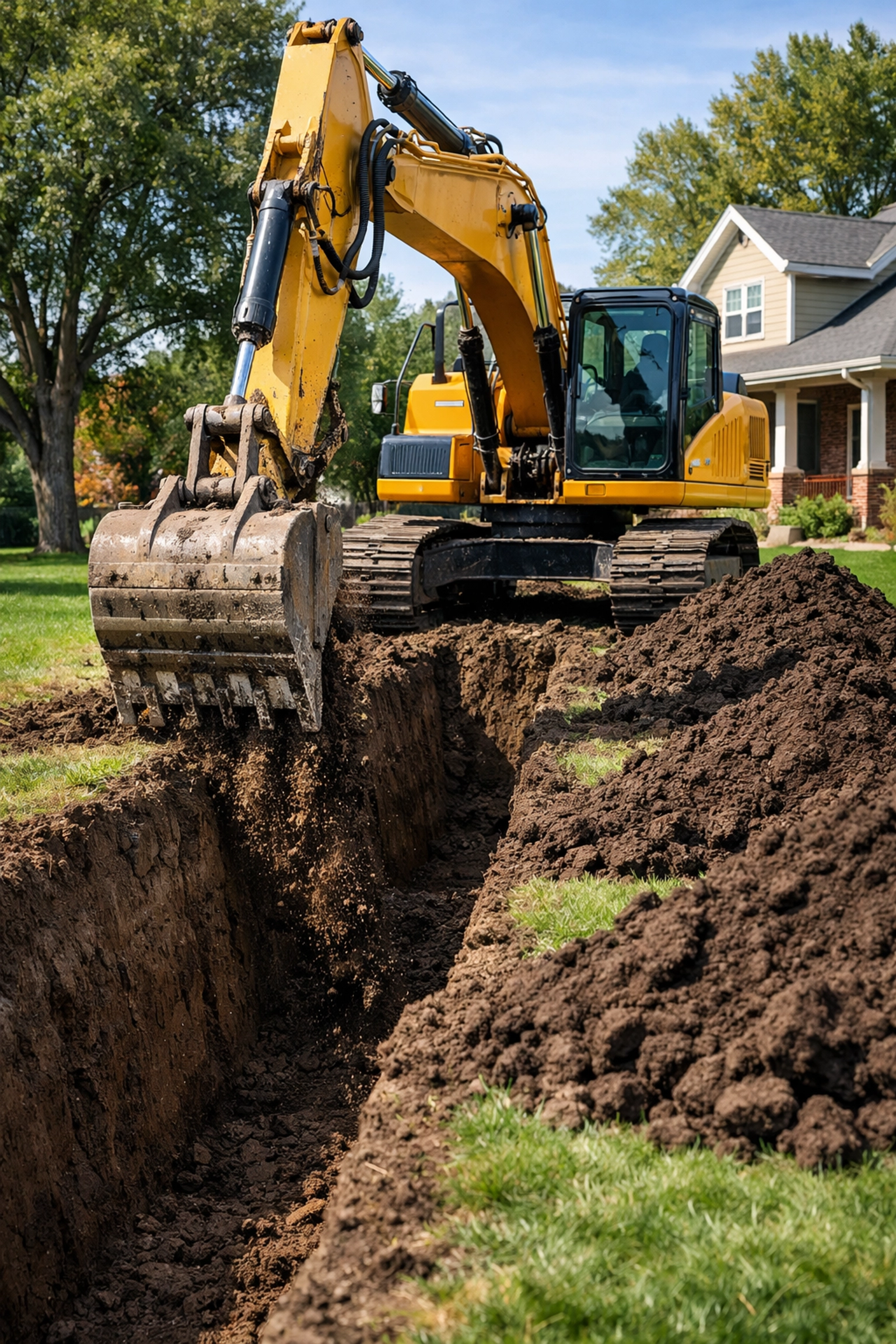
Traditional sewer repair is the "old school" method. It involves using heavy machinery, usually an excavator, to dig a deep trench along the entire length of your sewer line. Once the pipe is exposed, the technician removes the damaged sections and replaces them with new PVC piping.
The Process:
- Locating and Marking: Identifying exactly where the line runs through your property.
- Excavation: Digging up your lawn, driveway, or sidewalk to reach the pipe (often 6 to 10 feet deep).
- Replacement: Removing the old pipe and installing new materials.
- Backfilling: Filling the trench back in with dirt and gravel.
While this method is straightforward, the "collateral damage" is often high. If your sewer line runs under a mature oak tree, a pristine rose garden, or a custom-paved driveway, those features will likely be destroyed during the process.
What is Trenchless Sewer Repair?
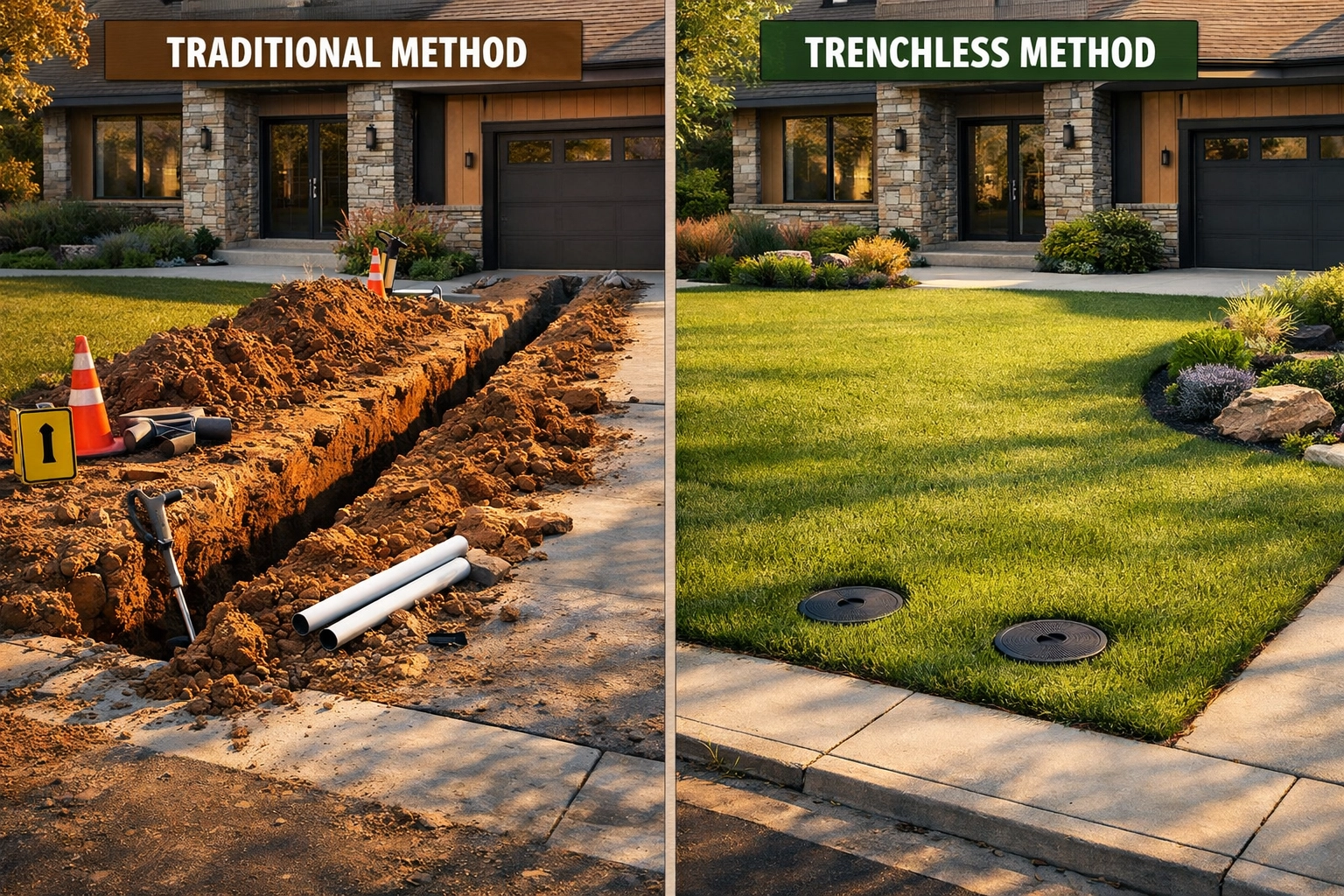
Trenchless technology, often referred to as "no-dig" technology, allows us to repair or replace your pipes with minimal disruption. Instead of a long trench, we only need one or two small access points. There are two primary methods we use at Denver Sewer Pros:
1. Pipe Bursting
Pipe bursting involves pulling a new, high-density polyethylene (HDPE) pipe through the old, damaged one. A heavy-duty "bursting head" breaks the old pipe apart and pushes the fragments into the surrounding soil, making room for the new, seamless pipe immediately behind it. This is a popular option for Residential Sewer Repair & Installation because it allows for "upsizing" the pipe if your home needs better flow capacity.
2. Sewer Lining (CIPP)
Cured-in-Place Pipe (CIPP) involves inserting a flexible, resin-saturated felt tube into the existing pipe. Once in place, the resin is cured (hardened), creating a "pipe within a pipe." This new inner wall is smooth, jointless, and highly resistant to the root intrusion common in older Denver neighborhoods.
Head-to-Head: The Comparison
| Feature | Traditional Excavation | Trenchless (Bursting/Lining) |
|---|---|---|
| Timeframe | 5 to 14+ Days | 1 to 3 Days |
| Property Impact | Major (Trenching through yard/driveway) | Minimal (Small access holes) |
| Average Cost | $7,000 – $30,000+ (Including restoration) | $4,000 – $15,000 |
| Durability | 50 – 100 Years | 50 – 100 Years |
| Restoration Needs | Significant (Landscaping, concrete, sod) | Very Low |
The Cost Myth
Many homeowners look at the "per foot" cost and assume traditional is cheaper. While the raw labor of digging can sometimes be less expensive than high-tech lining equipment, this ignores restoration costs.
In Denver, if we have to dig up a public sidewalk or a paved driveway in Arvada or Lakewood, the cost to repave and permit that work can add thousands to your final bill. Trenchless methods often have a higher upfront service cost but a significantly lower total project cost because your yard stays intact.
Why Denver Soil and Infrastructure Matter
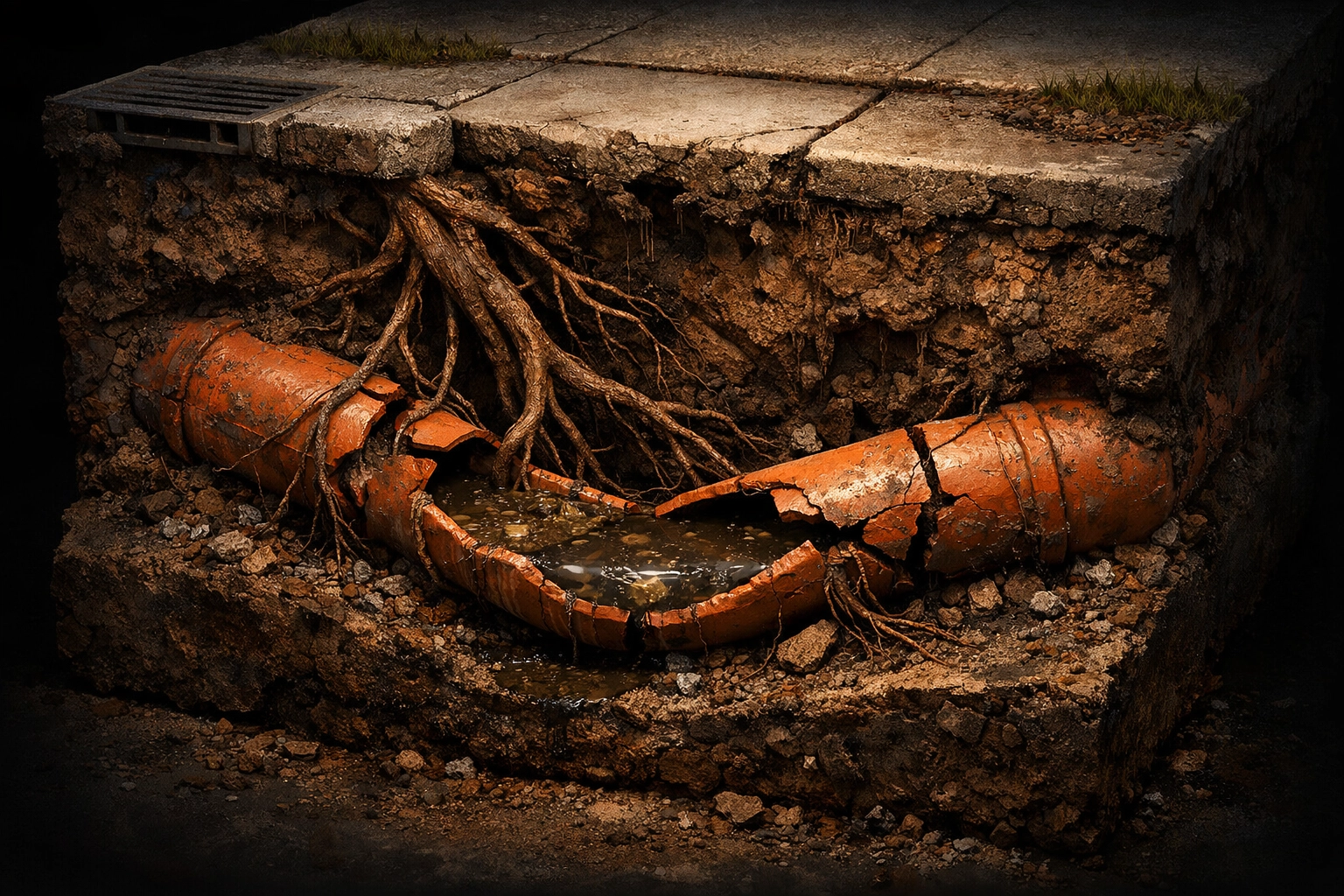
Denver presents unique challenges for sewer lines. Our semi-arid climate and "bentonite" clay soils mean the ground is constantly expanding and contracting. This movement puts immense pressure on old clay and cast-iron pipes, leading to "offsets" (where two sections of pipe no longer align) and cracks.
Furthermore, many of our most beautiful neighborhoods are filled with mature trees. Their roots are naturally drawn to the moisture inside sewer lines.
- Traditional repair removes the roots but leaves the soil disturbed, which can sometimes lead to further shifting.
- Trenchless lining creates a seamless barrier that roots simply cannot penetrate, providing a long-term solution for tree-heavy areas like Edgewater or Wheat Ridge.
For more on how we handle these specific Denver challenges, visit our Trenchless Pipe Burst & Liners page.
When Traditional Excavation is the Only Choice
As much as we love trenchless technology, it isn't a magic wand. There are specific scenarios where Denver Sewer Pros will recommend a traditional dig:
- Fully Collapsed Pipes: If the pipe has completely collapsed, we cannot get a lining or a bursting head through it.
- Severe Back-Grade: If your pipe was installed with a "belly" (a low spot where water pools), a liner will simply follow that same belly. To fix the slope of the pipe and ensure proper gravity flow, we must dig it up and re-grade the ground.
- Extreme Offsets: If the pipes have shifted so far that they are no longer connected, trenchless methods may not be able to navigate the gap.
- Utility Interference: In some dense parts of Denver or Aurora, other utility lines (gas, water, electric) may be too close to allow for pipe bursting safety.
The Denver Sewer Pros Process
We don't guess; we inspect. Before recommending a repair method, we perform a comprehensive high-definition sewer camera inspection. This allows us to see exactly what is happening underground.
Our Strategy:
- Hydro-Jetting First: If the line is full of debris or roots, we often use High-Pressure Hydro-Jet Cleaning to clear the path. This gives us a clear view of the pipe's structural integrity.
- Expert Evaluation: We evaluate the depth, the material, and the location of the failure.
- Transparent Options: We provide you with a side-by-side comparison of the costs and benefits for your specific property, whether you are in Golden, Westminster, or Greenwood Village.
Frequently Asked Questions (FAQ)
Q: Is trenchless repair as durable as a new PVC pipe? A: Yes. The HDPE pipe used in bursting and the epoxy resins used in CIPP lining are rated to last 50 to 100 years. They are often more durable than the original pipe materials used in mid-century homes.
Q: Does the city of Denver allow trenchless repairs? A: Yes, though local municipalities have different codes. We handle all permitting and ensure every repair: trenchless or traditional: meets the specific requirements of your city, whether it’s Northglenn, Superior, or Longmont.
Q: How do I know if I need a repair or just a cleaning? A: Periodic backups can often be solved with cleaning. However, if you find yourself calling a plumber every 6 months to clear roots, you have a structural problem. A camera inspection is the only way to know for sure.
Summary: Making the Right Choice
For the vast majority of Denver homeowners, trenchless repair is the superior choice. It saves your landscaping, finishes in a fraction of the time, and provides a permanent, root-proof solution. However, if your line has suffered a total structural failure or slope issues, traditional excavation remains a reliable and necessary tool in our arsenal.
Highlights of Trenchless:
- Preserves your driveway and gardens.
- Faster turnaround (usually 1-2 days).
- Seamless pipes prevent future root intrusion.
Highlights of Traditional:
- Necessary for collapsed or "bellied" lines.
- Allows for total manual reconfiguration of the line's grade.
Get Expert Peace of Mind
Don't wait for a total collapse to address your sewer concerns. Whether you are in Lakewood, Loveland, or anywhere in the service area, our team is ready to help.
Contact Denver Sewer Pros today for a professional evaluation and a long-lasting solution for your home.
Nathan Fairchild
CEO, Denver Sewer Experts
Website:
denversewerpros.com
Email: admin@denversewerpros.com
Phone: (720) 364-4891