
Book a Service Today
10 Reasons Your Sewer Line Isn’t Working (And How to Fix It)
![[HERO] 10 Reasons Your Sewer Line Isn’t Working (And How to Fix It)](https://cdn.marblism.com/hih45luZl1U.webp)
A malfunctioning sewer line is more than a minor inconvenience; it is a significant property emergency that can lead to water damage, health hazards, and costly structural repairs. In the Denver metro area, where shifting soils and aging infrastructure are common, homeowners frequently face drainage challenges. Understanding the root cause of a sewer failure is the first step toward a permanent solution.
At Denver Sewer Pros, we specialize in diagnosing and resolving complex wastewater issues. Whether you are experiencing slow drains in Arvada or a complete backup in Lakewood, identifying the specific culprit allows for a targeted, cost-effective repair. Below are the 10 most common reasons your sewer line isn't working and the professional steps required to fix them.
1. Clogs from Non-Flushable Items
The most frequent cause of sewer line failure is the introduction of foreign objects into the system. Despite being marketed as "flushable," products such as baby wipes, feminine hygiene products, and heavy paper towels do not disintegrate like standard toilet paper. These items snag on imperfections in the pipe, creating a physical mass that eventually halts all flow.
The Fix: Minor clogs near the fixture may be cleared with a plunger, but main line blockages require professional equipment. We utilize heavy-duty motorized augers or high-pressure hydro-jet cleaning to pulverize these obstructions and restore full diameter to your pipes.
2. Tree Root Intrusion
Tree roots are naturally drawn to the moisture and nutrients found inside sewer lines. Even a microscopic crack in an old clay or cast iron pipe is enough for a root hair to enter. Once inside, the root grows rapidly, acting as a net that catches debris and eventually creates a solid block. This is a common issue in established Denver neighborhoods with mature landscaping.
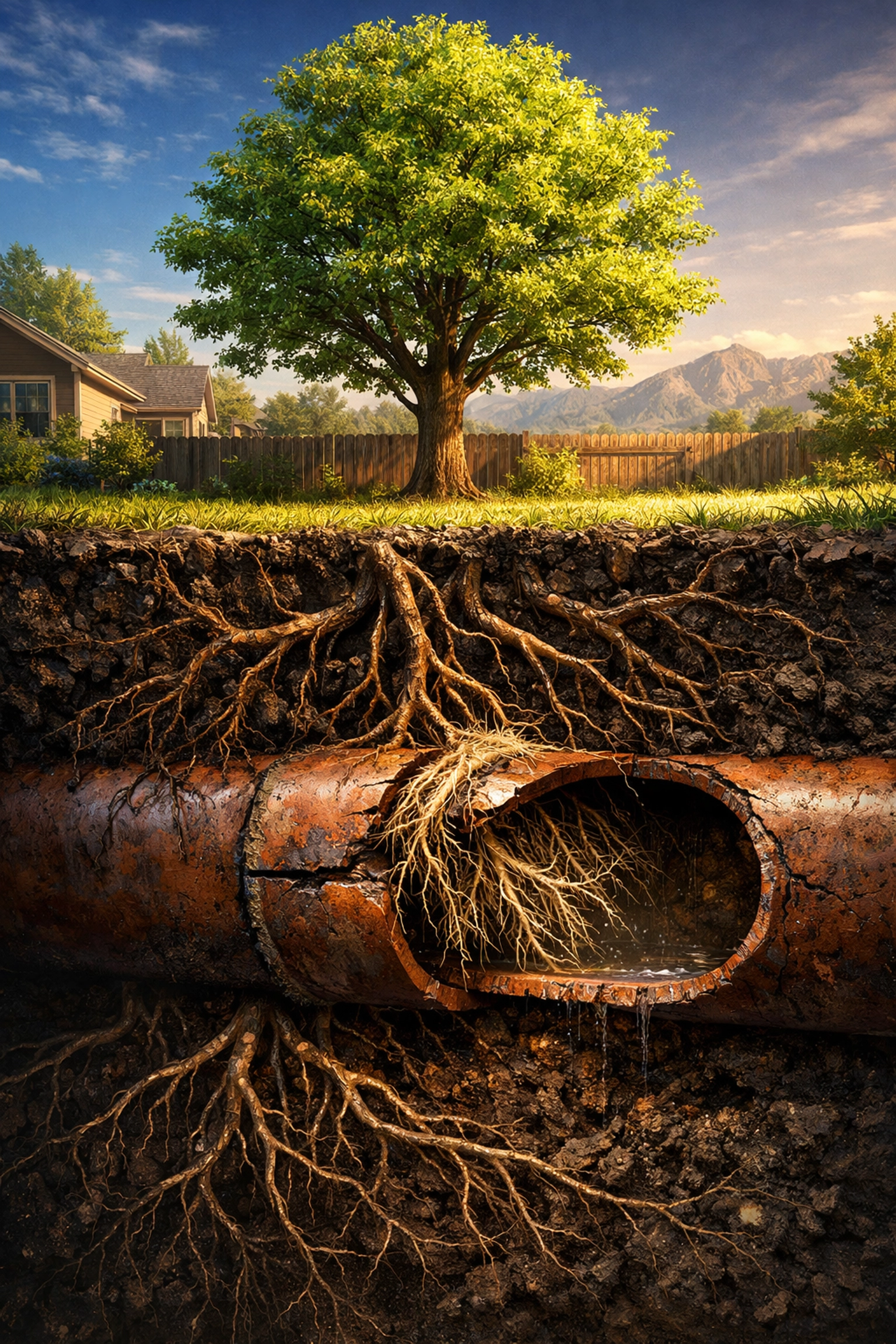
The Fix: Chemical root killers are often temporary fixes. For a long-term solution, we perform a Sewer Video Inspection to locate the intrusion point. We then mechanically remove the roots and may recommend trenchless pipe burst or liners to seal the pipe and prevent future entry.
3. Pipe Corrosion and Deterioration
If your home was built before the 1970s, it likely utilizes cast iron or clay pipes. Over decades, cast iron undergoes oxidation, leading to "scaling" or rust buildup that catches waste. Eventually, the bottom of the pipe can rot out entirely, leading to structural collapse. Clay pipes, while resistant to corrosion, are brittle and prone to cracking at the joints.
The Fix: Heavily corroded pipes often require replacement. We prioritize residential sewer repair and installation using modern HDPE (High-Density Polyethylene) or PVC, which are impervious to corrosion and have a lifespan of over 50 years.
4. Bellied or Sagging Pipes
A "belly" occurs when a section of the sewer line sinks due to unstable soil conditions or improper bedding during installation. Because sewer systems rely on gravity flow, these low spots collect standing water and sediment. Over time, heavy solids settle in the belly, leading to chronic, recurring backups.
The Fix: Unfortunately, trenchless lining cannot fix a structural belly because the liner will simply follow the existing sag. Fixing a bellied pipe typically requires traditional excavation to regrade the soil and install new pipe at the correct slope(usually 1/4 inch per foot).
5. Fat, Oil, and Grease (FOG) Buildup
Pouring warm grease down the kitchen sink is a recipe for disaster. As the grease moves into the cooler underground sewer lines, it solidifies. This creates a waxy buildup known as a "fatberg" that narrows the pipe’s interior diameter, similar to a clogged artery.
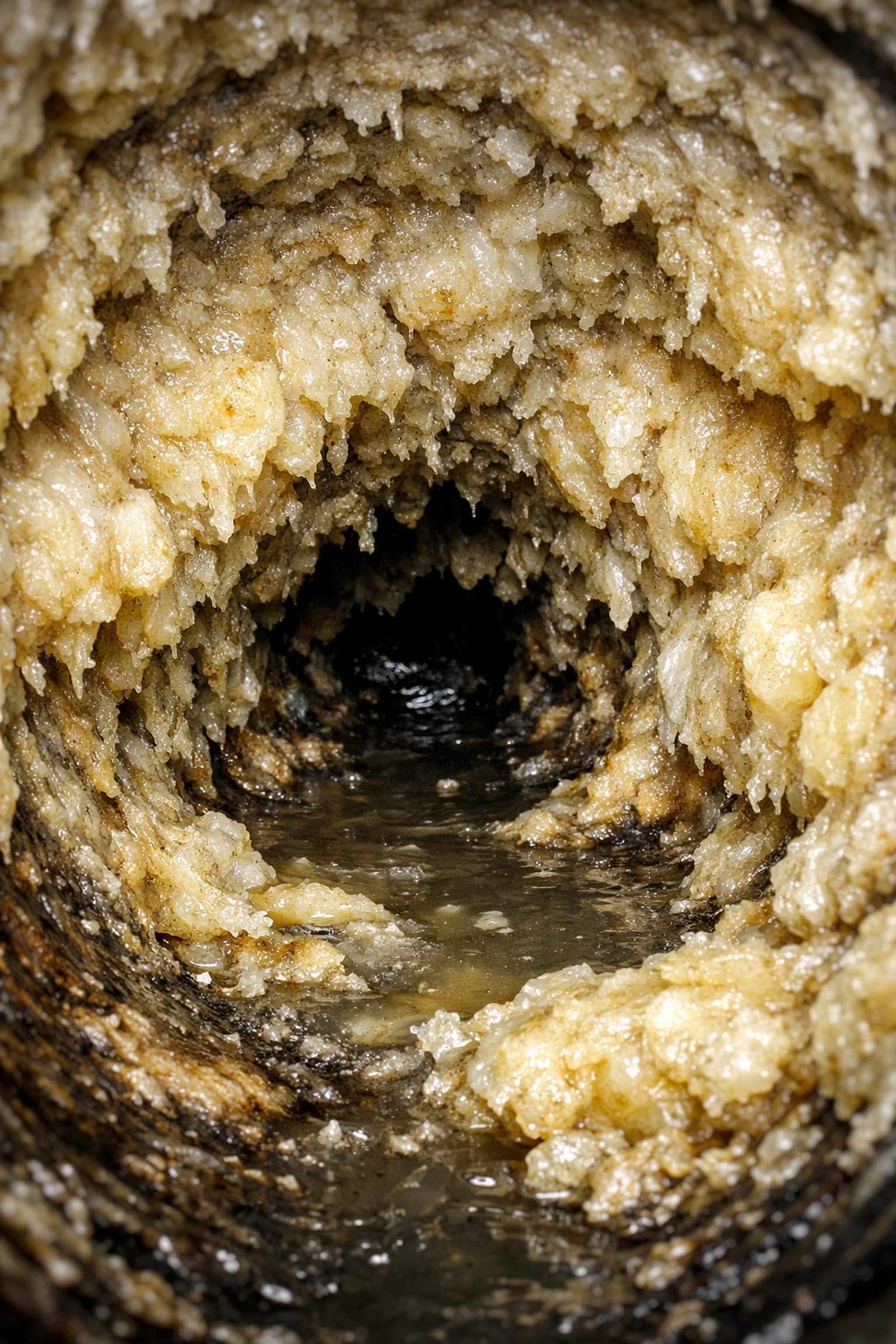
The Fix: Traditional snaking often just pokes a hole through grease. To completely clear FOG buildup, Hydro-jetting is the gold standard. This process uses 4,000 PSI of water pressure to scrub the pipe walls clean, flushing the residue out to the city main.
6. Cracked or Collapsed Pipes
Denver’s extreme temperature fluctuations and expansive bentonite clay soils put immense pressure on underground utilities. Shifting ground can cause pipes to crack, offset, or collapse entirely. Once the structural integrity is compromised, soil enters the pipe, and sewage leaks into the surrounding ground, often resulting in sinkholes or foul odors in the yard.
The Fix: We utilize high-definition cameras to determine the extent of the damage. If the collapse is localized, a spot repair may suffice. For more extensive damage in areas like Westminster or Wheat Ridge, we often employ Pipe Bursting, a trenchless method that pulls a new pipe through the old one, breaking the damaged pipe outward.
7. Leaking Pipe Joints
Sewer lines are comprised of multiple sections. The seals between these sections can deteriorate over time due to age or ground movement. Leaking joints allow untreated wastewater to escape, which can attract roots and saturate the soil around your foundation, potentially leading to structural settling of the home.
The Fix: In many cases, we can repair leaking joints from the inside using Cured-in-Place Pipe (CIPP) lining. This involves inserting a resin-saturated felt tube into the pipe, which then hardens to create a seamless, jointless "pipe within a pipe."
8. Scale Buildup in Older Systems
In many Denver sewer services calls, we find that the pipe isn't broken, but is instead "choked" by mineral scale. Magnesium and calcium from the water supply, combined with iron oxide in cast iron pipes, create a rough, sandpaper-like surface that prevents waste from sliding through smoothly.
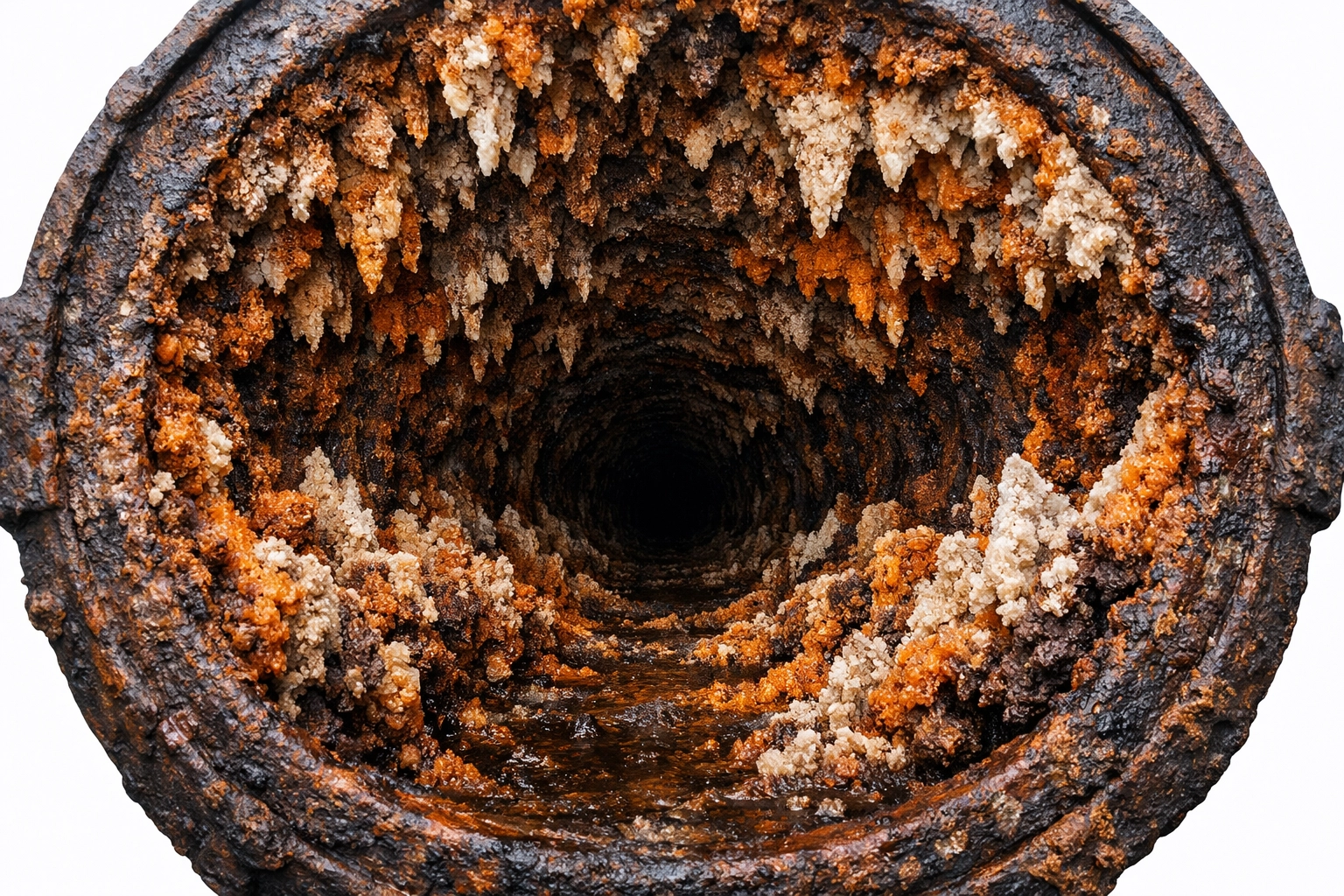
The Fix: Descaling is the process of using specialized rotating chains to scrape the interior walls of the pipe. This restores the smooth flow characteristics of the pipe without the need for full replacement.
9. Improper Garbage Disposal Use
Garbage disposals are designed for light food residue, not bulk waste. Disposing of fibrous materials (like celery or corn husks), starchy foods (like potato peels or pasta), or coffee grounds can lead to heavy sludge in the main sewer lateral. These materials do not break down easily and often settle in the horizontal sections of the line.
The Fix: If your disposal has caused a main line backup, we typically use a combination of mechanical cleaning and flushing to clear the line. We recommend homeowners limit disposal use to maintain the health of their residential sewer repair and installation.
10. Poor Installation or Negative Grade
If a sewer line was installed without the proper "pitch," it will never drain correctly. We often see this in newer developments where the soil wasn't properly compacted before the pipes were laid. "Negative grade" means the pipe actually runs uphill at some point, causing immediate and frequent backups.
The Fix: This is a structural defect that requires engineering expertise. Our team at Denver Sewer Pros can calculate the necessary elevation changes and reinstall the line to ensure consistent gravity-fed drainage.
Professional Diagnostics: The Key to Saving Money
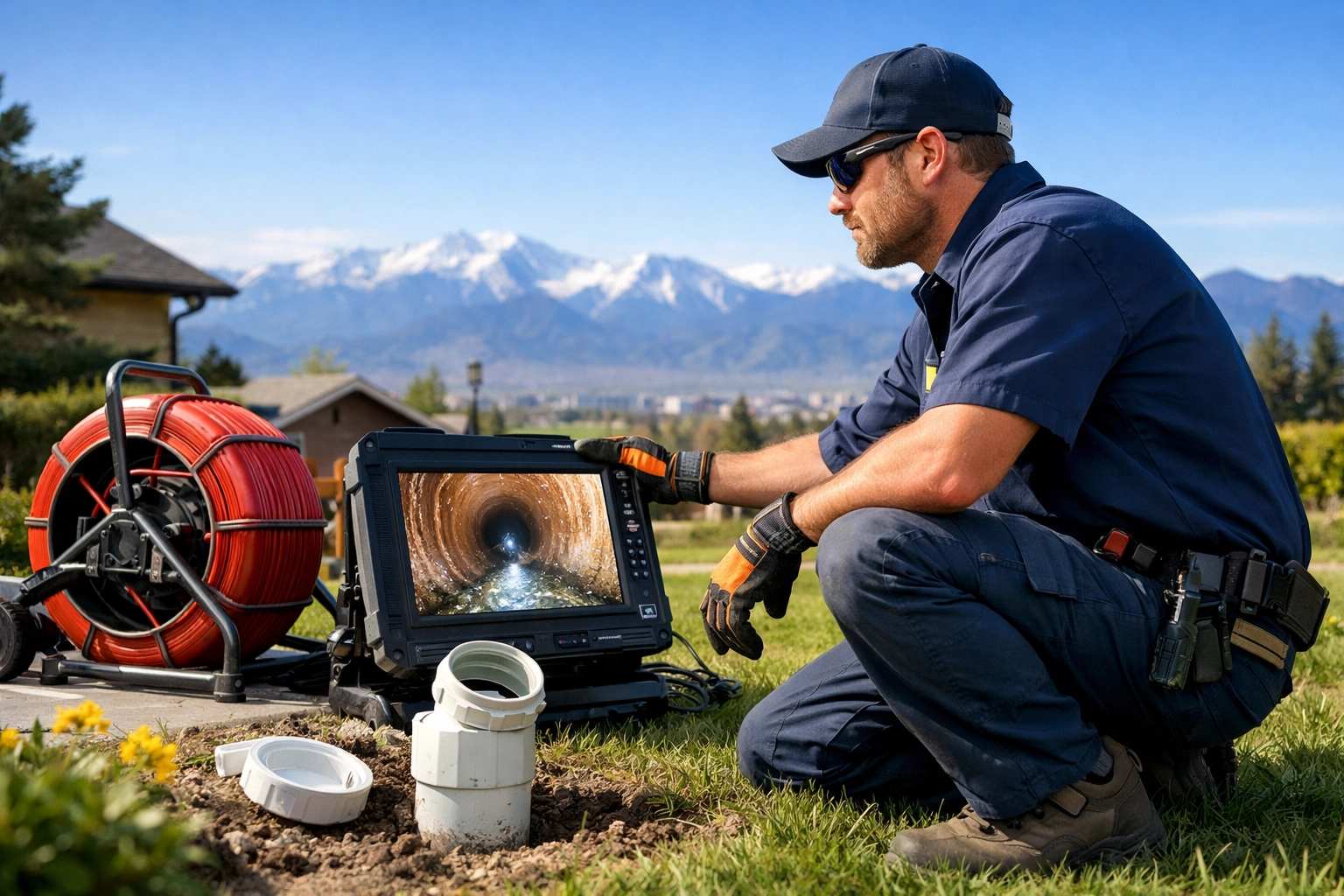
Guesswork is expensive in the world of plumbing. Before you authorize any digging, a professional Video Pipeline Inspection is essential. By feeding a waterproof camera through your cleanout, we can see exactly what is happening 10 feet underground.
Highlights of Our Diagnostic Process:
- Precision Locating: We use electromagnetic transmitters to find the exact depth and location of the problem, minimizing the impact on your landscaping.
- Visual Proof: We provide you with the footage so you can see the roots, cracks, or clogs for yourself.
- Strategic Planning: Knowing the exact issue allows us to offer the most efficient repair method, whether that’s a simple jetting service in Arvada or a trenchless replacement in Golden.
Frequently Asked Questions
How can I tell if my sewer line is failing? Common warning signs include multiple clogged drains, gurgling noises from toilets, sewage odors in the basement or yard, and unusually lush patches of grass over the sewer line.
Is trenchless repair better than traditional digging? In most cases, yes. Trenchless methods like Pipe Bursting or Lining are faster, less invasive to your yard and driveway, and often carry longer warranties. However, they cannot fix "bellied" pipes.
Does homeowners insurance cover sewer line repair? Standard policies often do not cover the line between your house and the city main unless you have a specific "Sewer Lateral" or "Service Line" endorsement. We recommend checking your policy before an emergency occurs.
How often should I have my sewer line cleaned? For older homes with mature trees in areas like Edgewater or Greenwood Village, we recommend a preventative inspection and cleaning every 18 to 24 months.
Expert Solutions for Denver Homeowners
If your drains are slowing down or you suspect a structural issue with your sewer line, don't wait for a total backup. Proactive maintenance is always more affordable than emergency remediation. Denver Sewer Pros offers comprehensive diagnostics and advanced repair solutions across the front range, from Longmont and Loveland down to Northglenn and Superior.
For peace of mind and an expert evaluation of your home’s waste system, contact the specialists who understand Denver’s unique geological and infrastructural challenges.
Ready for a long-lasting solution? Contact Denver Sewer Pros today to schedule your professional sewer inspection.
Nathan Fairchild
CEO, Denver Sewer Experts
Website:
denversewerpros.com
Email: admin@denversewerpros.com
Phone: (720) 364-4891