
Book a Service Today
Pipe Bursting vs. Full Excavation: Which Is Better For Your Denver Sewer Repair?
![[HERO] Pipe Bursting vs. Full Excavation: Which Is Better For Your Denver Sewer Repair?](https://cdn.marblism.com/QSdt94pvg8q.webp)
Finding out your main sewer line has failed is a stressful moment for any homeowner in the Denver metro area. Whether you are dealing with root intrusion in an older home in Arvada or a structural collapse in Aurora, the question quickly shifts from "what happened?" to "how do we fix it without destroying the property?"
In the plumbing industry, there are two primary schools of thought for major line replacement: traditional full excavation and trenchless pipe bursting. Both methods serve the same ultimate goal, restoring a functional waste exit for your home, but the processes, costs, and impacts on your landscaping couldn't be more different. At Denver Sewer Pros, we specialize in both methods, ensuring that our recommendations are based on the specific needs of your property rather than a one-size-fits-all approach.
Understanding Traditional Full Excavation
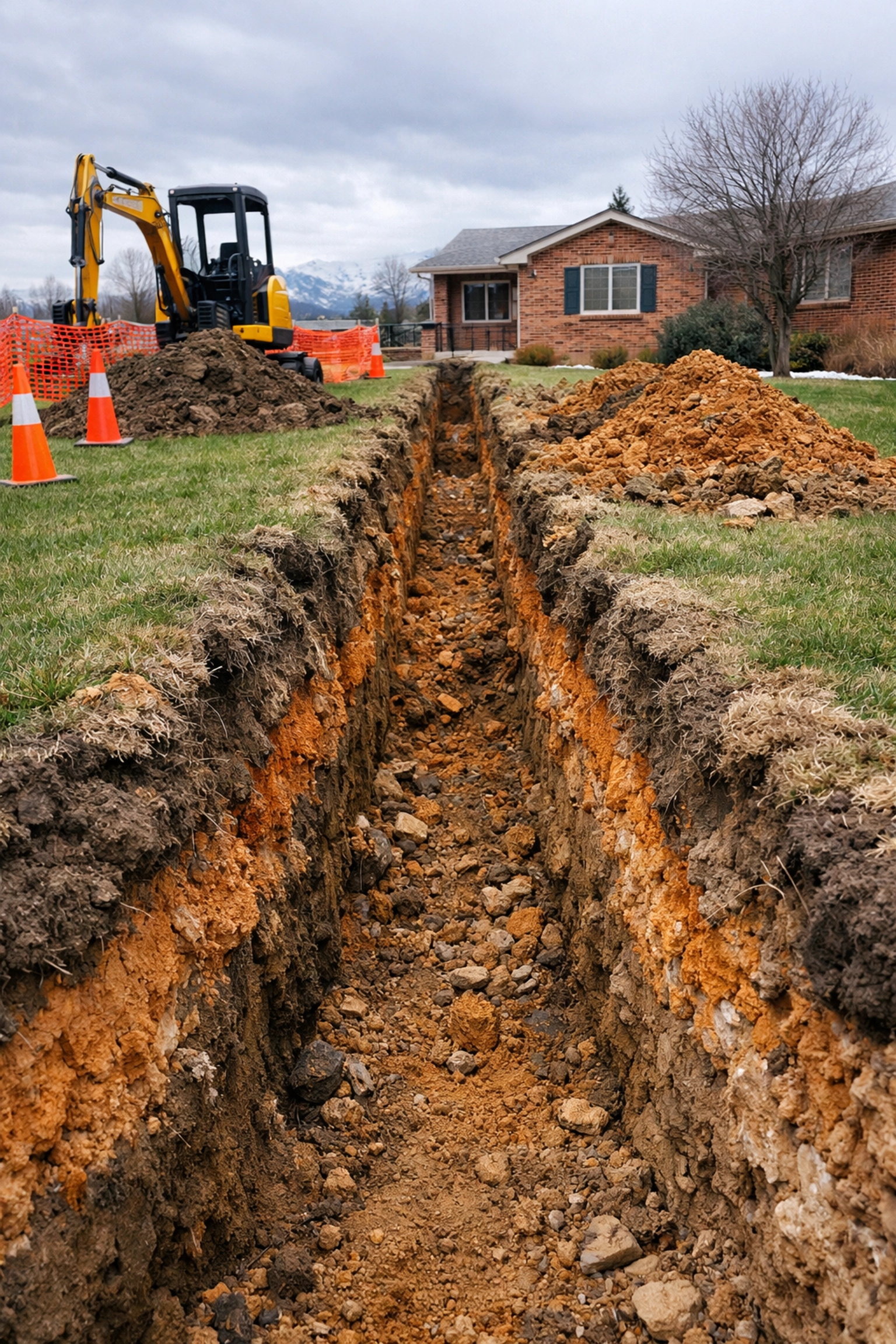
Traditional excavation, often referred to as the "open-cut" method, has been the industry standard for decades. This process involves using heavy machinery, typically a backhoe or mini-excavator, to dig a trench along the entire length of your sewer line.
How the Process Works
- Utility Locates: Before any digging begins, we must identify all underground utilities to avoid damaging gas, water, or electrical lines.
- Trenching: The crew digs a trench from the house to the city main or the septic tank. In Denver, sewer lines can be anywhere from 4 to 12 feet deep, meaning the volume of dirt removed is significant.
- Pipe Removal and Replacement: The old, damaged pipe (often clay, cast iron, or Orangeburg) is removed, and a new PVC line is installed in the open trench.
- Backfilling: Once the new pipe is inspected, the dirt is replaced and compacted.
The Challenges of Excavation
The primary drawback of full excavation is the disruption to your property. If your sewer line runs under a manicured lawn, a paved driveway, or an expensive patio, those features will be destroyed during the process. Furthermore, soil settling can occur for months after the job is finished, often requiring additional landscaping work later.
The Trenchless Revolution: What is Pipe Bursting?
If you want to avoid turning your front yard into a construction zone, pipe bursting is the modern solution. As a leading provider of trenchless pipe bursting and liners, we often recommend this method for homeowners who value their landscaping and hardscaping.
How Pipe Bursting Works
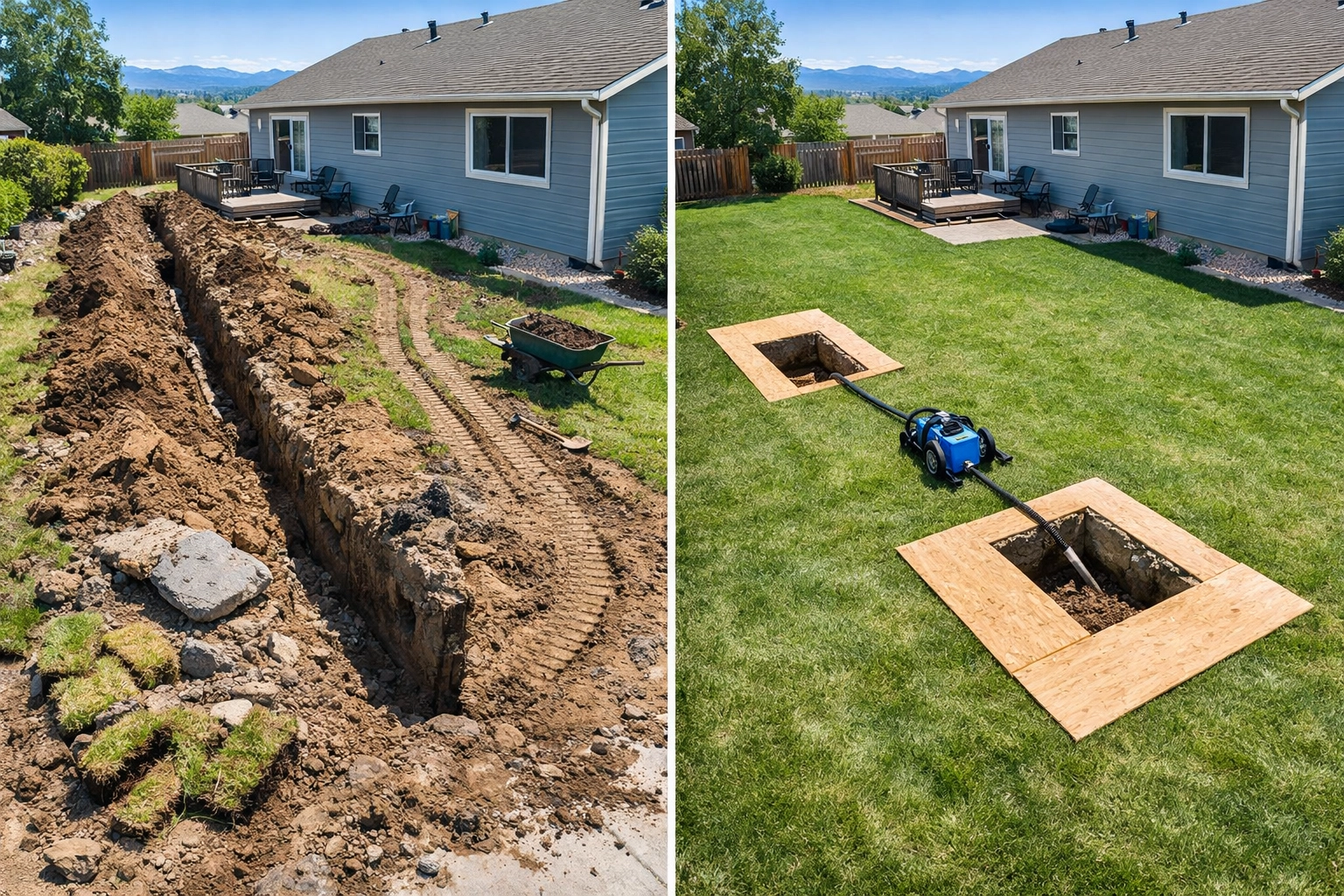
Instead of digging a long trench, pipe bursting requires only two small access points: an insertion pit and a receiving pit.
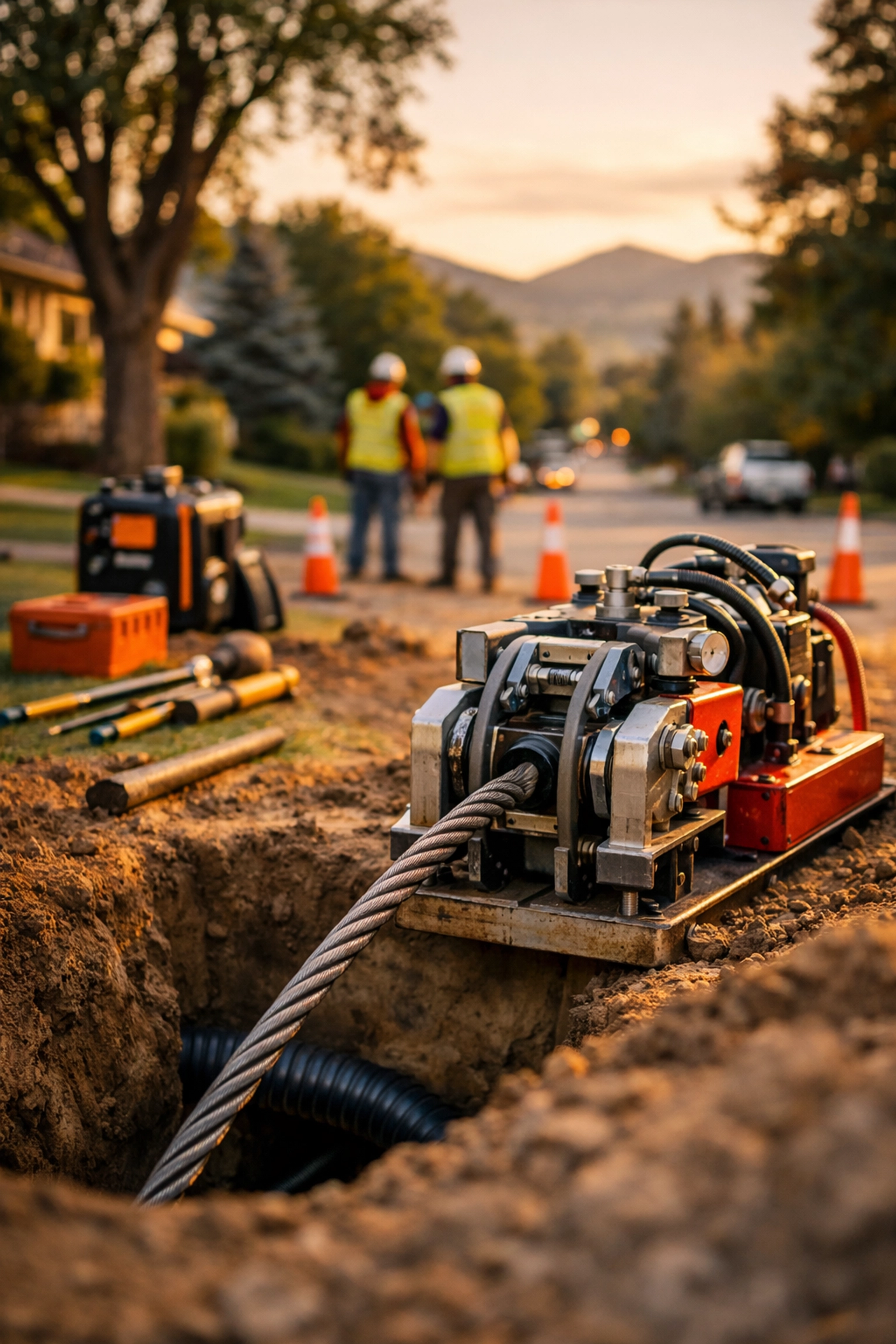
- The Bursting Head: A conical "bursting head" is attached to a high-tensile strength steel cable.
- Fracturing the Old Pipe: As the head is pulled through the old sewer line by a powerful hydraulic ram, it physically fractures (bursts) the old pipe, pushing the fragments into the surrounding soil.
- Seamless Installation: Simultaneously, the bursting head pulls a new, seamless HDPE (High-Density Polyethylene) pipe behind it.
The result is a brand-new pipe in the exact same path as the old one, installed with almost zero impact on the surface of your yard.
Benefits of Pipe Bursting
- Minimal Yard Disruption: No need to dig up gardens, trees, or sidewalks.
- Superior Durability: HDPE pipe is flexible, leak-proof, and highly resistant to root intrusion and chemical corrosion.
- Efficiency: Most pipe bursting projects can be completed in a single day, significantly reducing labor time on-site.
Direct Comparison: Excavation vs. Pipe Bursting
When deciding which path to take for your residential sewer repair, it helps to look at the data side-by-side.
| Feature | Full Excavation | Pipe Bursting (Trenchless) |
|---|---|---|
| Surface Disruption | High (Entire length of pipe) | Low (Two small access pits) |
| Upfront Cost | Generally lower | Generally 30-50% higher |
| Restoration Cost | High (Landscaping, concrete, sod) | Minimal |
| Installation Time | 2–5 Days | 1 Day |
| Pipe Material | Usually PVC | Seamless HDPE |
| Best For | Shallow pipes or collapsed lines | Deep pipes under obstacles |
Cost vs. Value: The Hidden Expenses
Many homeowners initially lean toward full excavation because the "plumbing" portion of the quote may be lower. However, this can be a financial trap.
When you factor in the total cost of restoration, the math often shifts in favor of pipe bursting. If a traditional trench requires cutting through a concrete driveway and removing three mature trees, the restoration costs can easily exceed several thousand dollars. Because pipe bursting leaves these structures intact, the "expensive" trenchless technology actually saves you money in the long run.
At Denver Sewer Pros, we provide transparent estimates that consider the full scope of the project, whether you are in Westminster or Wheat Ridge.
When is Full Excavation Necessary?
While we love the efficiency of trenchless technology, it isn't always the right tool for the job. There are specific scenarios where our experts will recommend a traditional dig:
- Severely Collapsed Lines: If the old pipe has completely collapsed or "pancaked," there may not be enough space for the bursting head to pass through.
- Utility Proximity: In some Denver neighborhoods, gas or water lines are buried dangerously close to the sewer line. In these cases, we need the visibility of an open trench to ensure safety.
- Shallow Pipes: If your sewer line is only 2 or 3 feet deep, the cost of bringing in specialized hydraulic pipe-bursting equipment may not be justified compared to a quick manual dig.
- Significant Belly in the Line: If the original pipe was installed with a "belly" (a low spot where water pools), pipe bursting will likely follow that same path. To fix the grade of the pipe, we often must excavate to re-slope the line properly.
Why Denver Sewer Pros for Your Repair?
Choosing between these two methods requires a detailed sewer inspection. We use high-resolution waterproof cameras to see exactly what is happening underground before we ever pick up a shovel or a hydraulic ram.
We serve a wide variety of locations, including:
Our team is equipped with the latest trenchless technology and traditional earth-moving equipment. This dual expertise means we won't push a specific method just because it's the only one we know how to do. We choose the method that offers the highest longevity and the lowest total cost for your specific property.
Frequently Asked Questions
Q: Will pipe bursting damage my neighbor's property? A: No. Pipe bursting is a controlled process. The vibrations are localized to the pipe path, and since we aren't digging a massive trench, there is no risk of soil destabilization for neighboring structures.
Q: How long does the new HDPE pipe last? A: HDPE is rated for a lifespan of 50 to 100 years. It is essentially a "lifetime" fix for your home's sewer system.
Q: Does Denver Sewer Pros handle the permits? A: Yes. Whether we are working in Northglenn or Superior, we handle all necessary municipal permitting and inspections to ensure your repair is up to code.
Q: Can I use my water during the repair? A: During the actual "pull" (which usually takes a few hours), your water will need to be turned off. However, because trenchless repairs are so fast, you are rarely without service for more than a standard workday.
Final Verdict: Which Should You Choose?
If your sewer line is deep, runs under expensive landscaping, or is located beneath a driveway, pipe bursting is almost always the superior choice. The peace of mind that comes from a seamless, root-proof pipe without the destruction of your yard is invaluable.
However, if your line is shallow and easily accessible, or if there are major grading issues that need to be corrected, traditional excavation remains a reliable and effective solution.
Don't guess when it comes to your home's infrastructure. For an expert evaluation and a long-lasting solution that fits your budget and property needs, contact the team at Denver Sewer Pros today. We provide the clarity and technical skill required to get your main line back in peak condition.

Ready for a professional assessment? Contact Denver Sewer Pros today to schedule your camera inspection and find out which repair method is right for your home.
Nathan Fairchild
CEO, Denver Sewer Experts
Website:
denversewerpros.com
Email: admin@denversewerpros.com
Phone: (720) 364-4891