
Book a Service Today
Property Manager’s Cheat Sheet: Avoiding Sewer Disasters with HD Video Inspections
![[HERO] Property Manager’s Cheat Sheet: Avoiding Sewer Disasters with HD Video Inspections](https://cdn.marblism.com/LLmqtunzGDQ.webp)
For property managers in the Denver metro area, the infrastructure you don't see is often the most critical. Managing a multi-family complex in Lakewood or a commercial strip in Aurora requires a proactive approach to maintenance. Among the various responsibilities on your plate, the integrity of the underground waste system is paramount. A single main line backup can lead to thousands of dollars in property damage, displaced tenants, and a PR nightmare.
The most effective tool in your preventative arsenal is the high-definition (HD) video inspection. This guide serves as your professional cheat sheet for leveraging sewer inspections to protect your assets and maintain your bottom line.
What is an HD Video Sewer Inspection?
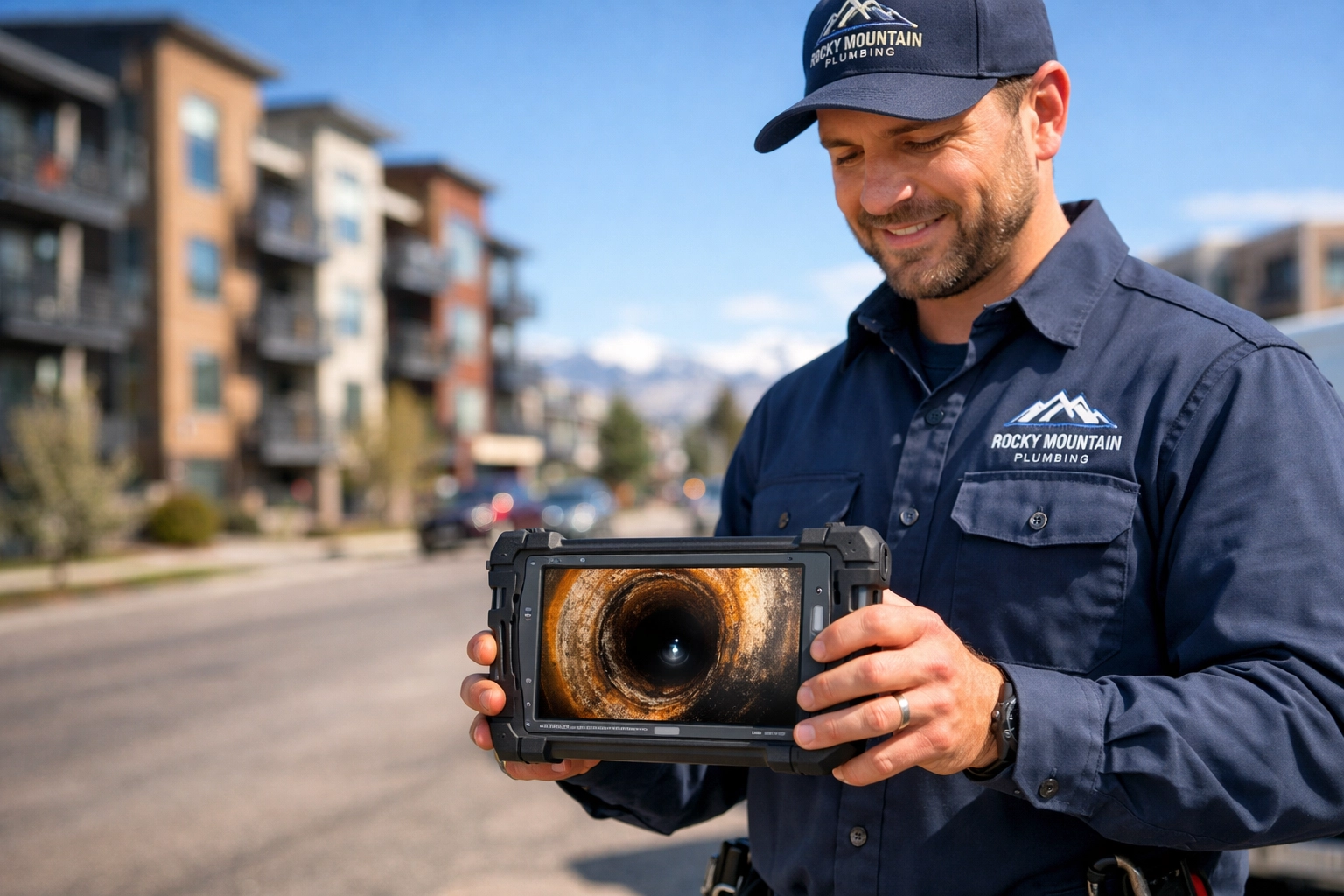
Modern sewer inspections utilize specialized equipment designed to navigate the harsh environment of a waste line. An HD video inspection involves a high-resolution, waterproof camera attached to a flexible fiber-optic cable. This "borescope" is inserted into the sewer line through an existing access point, known as a cleanout.
As the camera travels through the pipe, it transmits real-time footage to a monitor operated by a technician. This allows for an internal "physical" of the pipe without any excavation.
Key Technical Terms for Your Records:
- Borescope: The technical name for the camera system used to navigate the pipe interior.
- Cleanout: A capped pipe that provides direct access to the sewer line for cleaning or inspection.
- Sewer Scope: The common industry term for the process of performing a video inspection.
- Sonde: A transmitter inside the camera head that allows the technician to locate the exact depth and position of a problem area from above ground.

Why Denver Property Managers Can't Afford to Wait
The geology of the Front Range presents unique challenges for underground utilities. Denver's "expansive soils": clay that expands and contracts with moisture levels: can cause pipes to shift, crack, or lose their pitch. Furthermore, the age of the infrastructure in neighborhoods like Arvada or Wheat Ridge means many properties are still operating on original clay or cast-iron lines that have reached the end of their functional lifespan.
The Financial Impact of Being Reactive
Waiting for a "backup" to call a plumber is a high-risk strategy. Emergency repairs typically cost 30% to 50% more than scheduled maintenance. Beyond the plumbing bill, you face:
- Water Mitigation Costs: Professional drying and sanitization of units.
- Tenant Concessions: Rent credits or hotel stays for displaced residents.
- Liability Claims: Damage to tenant personal property.
- Structural Damage: Long-term mold and foundation issues caused by saturated soil.
Regular sewer inspections transition your strategy from "crisis management" to "asset management."
The Cheat Sheet: What the Camera Reveals
A professional inspection report from Denver Sewer Pros will highlight several critical conditions. Understanding these terms helps you prioritize your capital expenditure (CapEx) budget.
1. Root Intrusion
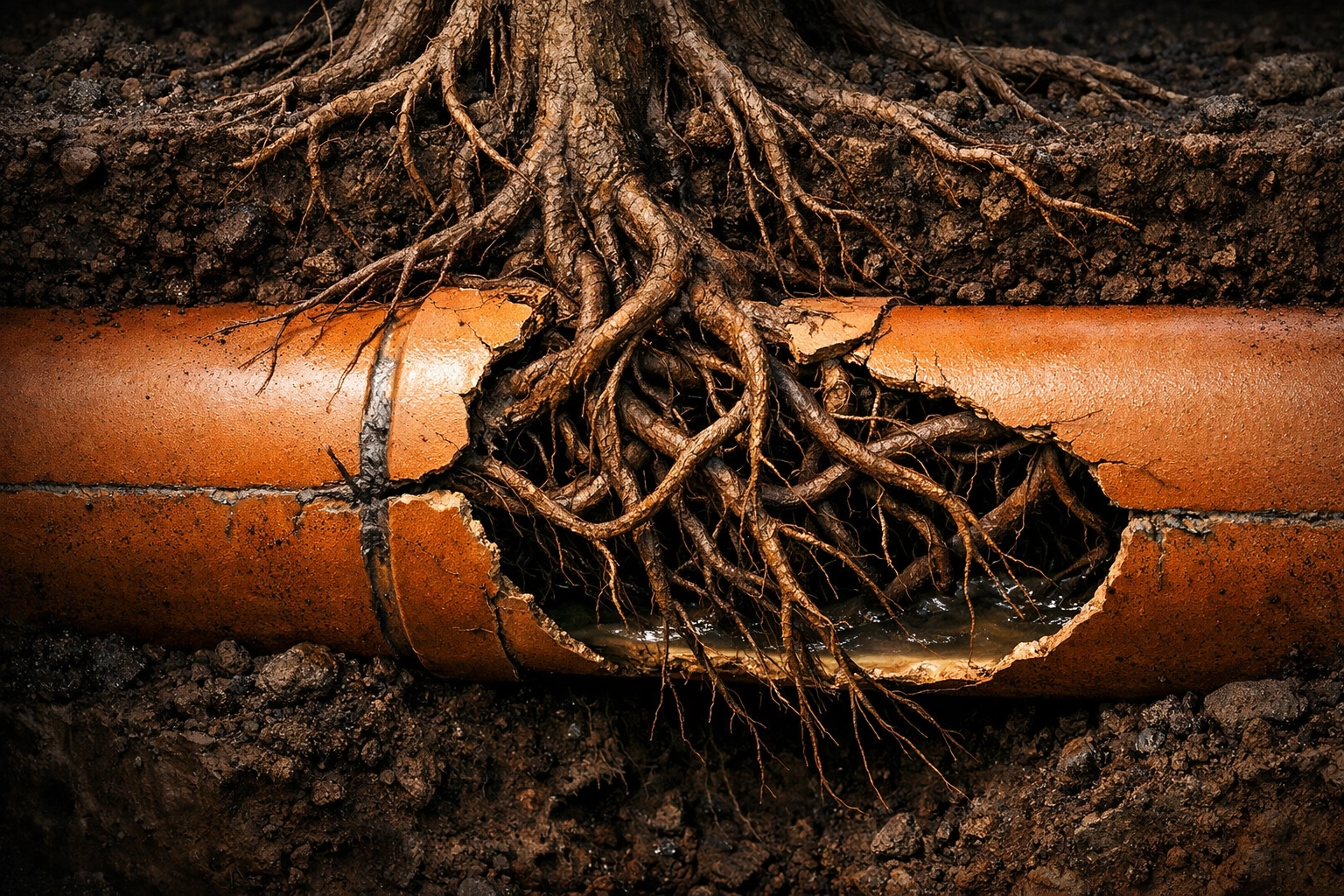
In established areas like Golden or Greenwood Village, mature trees are a major draw for tenants. However, their root systems are naturally drawn to the moisture inside sewer joints. Once a root enters a tiny crack, it expands, eventually causing a full blockage or structural collapse.
2. Line Bellying (Low Spots)
A "belly" occurs when a section of the pipe sinks, creating a stagnant pool of water. Debris and grease collect in these low spots, leading to frequent "soft blockages." Over time, the weight of the standing water can cause the pipe to deteriorate or fail entirely.
3. Offset Joints
In older clay pipes, sections can shift independently due to soil movement. An offset creates a "lip" inside the pipe that catches solids and prevents smooth flow. If left unaddressed, the soil surrounding the offset can wash into the pipe, creating a sinkhole under your parking lot or foundation.
4. Corrosion and Scaling
Cast iron pipes are susceptible to internal rust and "scaling." This narrows the diameter of the pipe and creates a sandpaper-like surface that snags toilet paper and waste. Proactive high-pressure hydro-jet cleaning can often resolve scaling before it requires a full replacement.
Professional Standards for Inspection Frequency
How often should you schedule sewer inspections? While a single-family home might only need one every few years, commercial and multi-family properties operate under much higher stress.
- Commercial Kitchens/Restaurants: Every 6 months. Grease buildup is rapid and requires constant monitoring.
- Multi-Family Units (Apartments/Condos): Every 12 months. High volume usage increases the risk of "foreign object" blockages.
- Pre-Acquisition: Always perform an inspection before purchasing a new property. Never rely on the previous owner's verbal history.
- Post-Repair: Ensure your contractor provides a "post-video" to verify the quality of the work.
Preparing for the Inspection: A Checklist for Managers
To get the most value out of your service call, ensure you have the following ready for your technician:
- Access Points: Ensure the main cleanouts are not covered by landscaping, decks, or tenant storage. If the property was built in the 1950s or 60s, access might only be available through a roof vent, which requires specialized safety equipment.
- Site Maps: If available, provide building plans showing the layout of the sewer main and its connection to the city tap.
- History of Backups: Document which units have had issues in the past. This helps the technician focus on potential "trouble spots" in the lateral lines.
- Power/Water Access: Ensure the property has active water service to test the flow during the inspection.
Interpreting the Results: The "Stoplight" Method
Not every finding requires an immediate excavation. A professional report will categorize issues by severity:
- Red (Emergency): Structural collapse, total blockage, or roots so thick the camera cannot pass. Requires immediate intervention (24-48 hours).
- Yellow (Critical): Significant bellies, moderate root intrusion, or cracked pipe walls. Plan for repair within 1-3 months.
- Green (Maintenance): Minor scaling or small root hairs. These can be managed with routine residential sewer repair & installation or cleaning.
Modern Solutions: Trenchless Technology
If an inspection reveals a failure, the old-school "dig a trench through the lobby" approach is no longer the only option. We specialize in trenchless solutions that are ideal for busy Denver properties.
Pipe Lining (CIPP)
Cured-In-Place Pipe (CIPP) lining involves inserting a resin-saturated felt tube into the existing pipe. Once cured, it creates a new, seamless "pipe within a pipe" that is root-proof and has a 50-year lifespan. This is often done with trenchless pipe burst & liners technology.
UV-C Curing
For property managers who cannot afford downtime, LightRay UV-C technology allows us to cure pipe liners in as little as 10 minutes. This means your tenants’ water is only off for a fraction of the time required by traditional methods.
Frequently Asked Questions (FAQ)
1. How long does a standard sewer inspection take?
Most inspections take between 45 and 90 minutes per main line, depending on the length of the run and ease of access.
2. Will you provide a digital copy of the footage?
Yes. Professional sewer inspections should always include a digital recording (via USB or cloud link) and a written report detailing the findings. This is vital for insurance and property valuation.
3. Can the camera see through a full blockage?
No. If the line is backed up with standing water and debris, the camera will be "blinded." In these cases, the line must be cleared with a cable or hydro-jet before an accurate inspection can be performed.
4. What is the average cost of an inspection in Denver?
Prices vary based on property size and access, but standard commercial inspections generally range from $250 to $600. Compared to a $15,000 emergency repair, the ROI is undeniable.

Partner with Denver’s Commercial Sewer Experts
Maintaining a property in Westminster, Northglenn, or Longmont requires a partner who understands the local landscape. At Denver Sewer Pros, we provide property managers with the data they need to make informed decisions.
Don't let a hidden pipe failure jeopardize your property’s reputation or your budget. Proactive sewer inspections offer the peace of mind that comes from knowing exactly what is happening beneath your feet.
Ready for an expert evaluation of your property’s sewer system? Contact Denver Sewer Pros today to schedule your HD video inspection and secure long-lasting solutions for your infrastructure.
Nathan Fairchild
CEO, Denver Sewer Experts
Website:
denversewerpros.com
Email: admin@denversewerpros.com
Phone: (720) 364-4891