
Book a Service Today
The Hidden Cost of Bad Maintenance: Why Your Grease Trap Installer Matters for Denver Compliance
![[HERO] The Hidden Cost of Bad Maintenance: Why Your Grease Trap Installer Matters for Denver Compliance](https://cdn.marblism.com/2DlDfFL5pii.webp)
Running a successful commercial kitchen in Denver is a balancing act of menu innovation, staff management, and strict adherence to health and safety regulations. Among the most critical, yet often overlooked, components of a functional kitchen is the grease management system. For business owners in the Mile High City, a grease trap is not merely a plumbing fixture; it is a regulatory requirement and a shield against catastrophic operational failures.
When a grease trap is poorly installed or neglected, the consequences extend far beyond a slow drain. From heavy municipal fines to legal liability for neighborhood sewage backups, the "hidden costs" of bad maintenance can cripple a business. Choosing the right grease trap installer is the first and most important step in ensuring long-term compliance and operational efficiency.
The Regulatory Reality in Denver
The City and County of Denver: along with surrounding municipalities like Aurora, Lakewood, and Arvada: mandates that all commercial food service establishments install and maintain functional grease interceptors. These regulations exist to prevent FOG (Fats, Oils, and Grease) from entering the public sanitary sewer system.
When FOG enters the main sewer lines, it cools and solidifies, creating "fatbergs" that cause massive blockages. Denver’s Department of Public Health & Environment (DDPHE) and local wastewater authorities perform regular inspections to ensure compliance. If your system is found to be inadequate or poorly maintained, you aren't just looking at a warning: you are looking at significant financial penalties.
The True Cost of Non-Compliance
- Administrative Fines: Local agencies can issue daily fines for non-compliance, which quickly escalate if the issue is not rectified.
- Operational Shutdowns: In severe cases of health code violations or repeated failures, the city has the authority to suspend your operating license until the system meets standards.
- Neighborhood Liability: If a grease-related blockage in the city main is traced back to your establishment, you are legally responsible for the cleanup costs and any property damage sustained by neighboring businesses.
- Emergency Repair Fees: Reactive maintenance is always more expensive than proactive care. Emergency hydro-jetting and pipe repairs can cost thousands more than a scheduled service.

Why Your Grease Trap Installer Dictates Your Success
Many business owners treat grease trap installation as a "lowest-bidder" task. However, the quality of the initial installation directly impacts your ability to remain compliant for years to come. A professional grease trap installer from Denver Sewer Pros understands that a compliant system must meet specific technical criteria.
1. Precision Sizing and Engineering
A grease trap that is too small for the kitchen's volume will bypass grease into the sewer line almost immediately. Conversely, a trap that is unnecessarily large can lead to the buildup of sulfuric acid, which corrodes the tank and surrounding pipes. Proper installation requires calculating the DFU (Drain Fixture Unit) values of all connected equipment to determine the correct capacity.
2. Strategic Placement and Accessibility
Denver code requires that grease interceptors be easily accessible for maintenance and inspection. If an installer places a trap behind heavy equipment or in a crawlspace that requires a ladder to access, it is a code violation. Poor accessibility leads to skipped maintenance, which inevitably leads to system failure.
3. Proper Venting and Flow Control
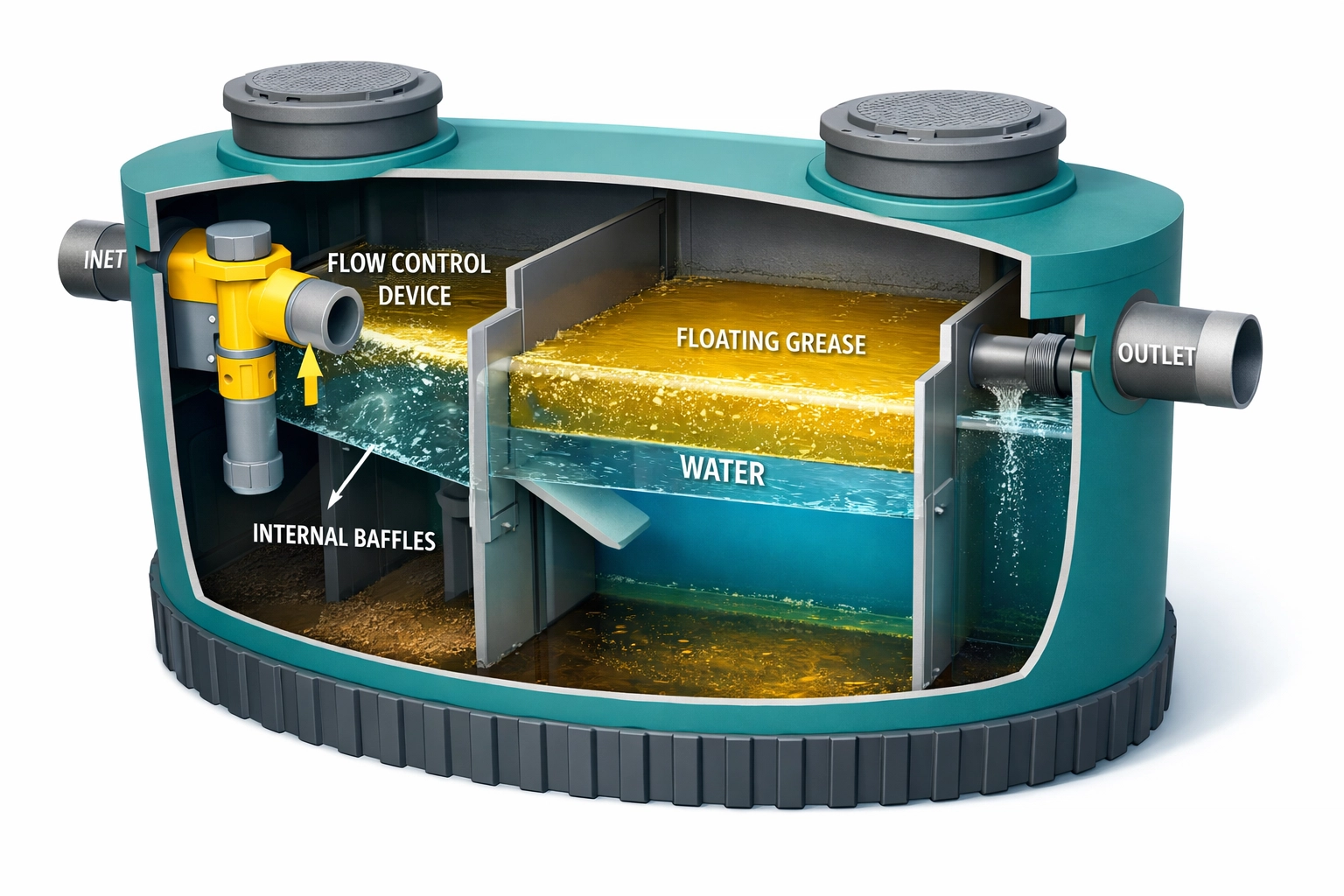
Without a properly installed flow control device, wastewater can move through the trap too quickly, preventing the grease from separating and floating to the top. Professional installers ensure that venting is handled correctly to prevent foul odors from backing up into your dining room: a common issue in poorly installed systems.
Technical Highlights: What Makes a Professional Installation?
When Denver Sewer Pros handles a commercial installation, we focus on several key engineering factors:
- Riser Diagrams: We provide detailed plumbing plans showing all waste lines routed through the interceptor.
- Sampling Ports: Most modern Denver regulations require a sampling port on the effluent (exit) side of the trap so inspectors can test the water quality.
- Material Selection: Depending on the kitchen's needs, we utilize high-density polyethylene (HDPE) or fiberglass tanks that resist the corrosive nature of decomposing food waste.
The Danger of "Handyman" Installations
We frequently see the aftermath of grease traps installed by general contractors or handymen who lack specialized sewer knowledge. These installations often skip the submission of a site plan for municipal approval.
Case Highlight: The Hidden Leak
- Scenario: A restaurant in Westminster reported a recurring foul odor and damp flooring near the kitchen.
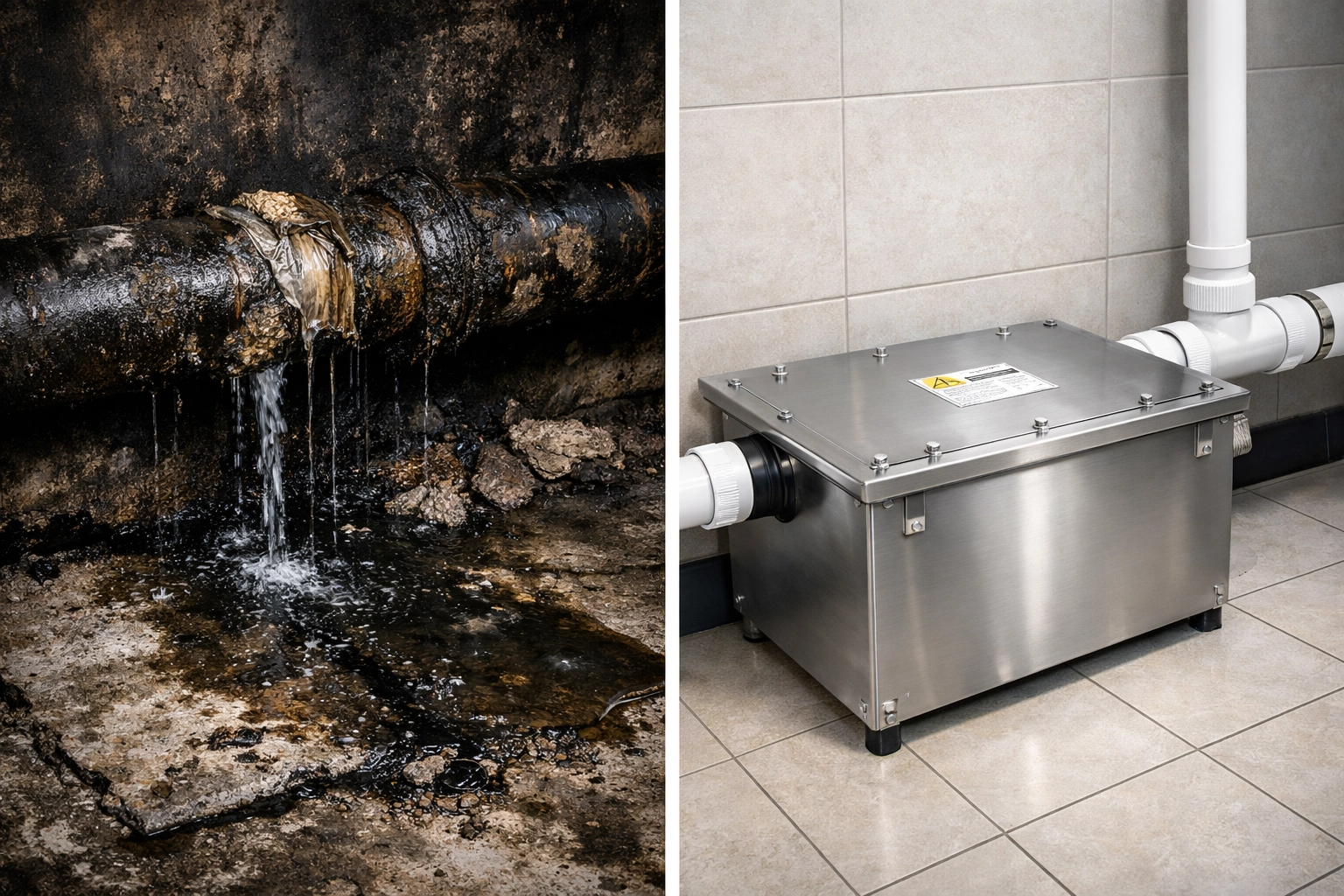
- The Problem: The previous installer failed to properly seal the interceptor's lid and used incorrect piping material that couldn't withstand the high temperatures of commercial dishwashers.
- The Result: Grease-laden water was leaking into the subfloor, causing structural rot and attracting pests.
- Solution: Denver Sewer Pros performed a full trenchless pipe repair and re-installed a compliant, sealed system.
Maintaining Compliance: The 25% Rule
Once a professional grease trap installer has set up your system, the responsibility shifts to maintenance. Denver generally follows the 25% Rule: Once the accumulation of FOG and solids reaches 25% of the trap's total capacity, it must be pumped and cleaned.
Failure to provide signed maintenance manifests during a city inspection is one of the most common reasons for fines. At Denver Sewer Pros, we recommend keeping a dedicated "Compliance Log" on-site at all times.
Warning Signs Your System is Failing:
- Slow Drains: The most common sign that the trap is full or a blockage is forming.
- Persistent Odors: Indicates a breach in the seal or a venting issue.
- Gurgling Noises: Suggests air is being trapped in the lines due to a backup.
- Grease in the Secondary Line: If you see grease during a video inspection of your main line, your trap has already failed.
Proactive Solutions for Denver Business Owners
Beyond installation, maintaining a grease-free sewer line requires advanced tools. For high-volume kitchens in areas like Golden or Greenwood Village, standard snaking is rarely enough.
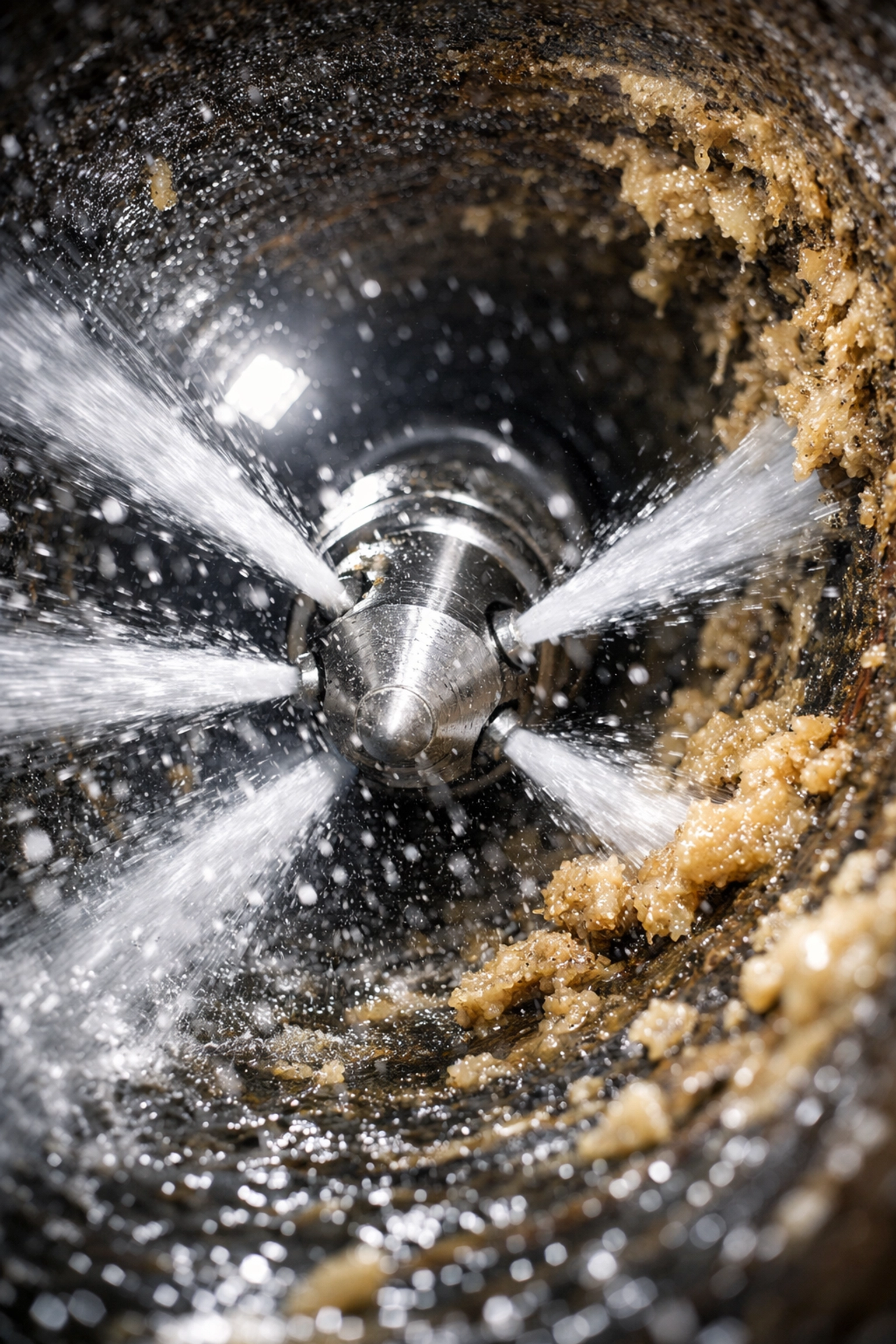
We utilize High-Pressure Hydro-Jet Cleaning to blast away grease buildup that has escaped the trap. This process uses specialized nozzles and pressurized water to restore pipes to "like-new" condition without the need for excavation.
Frequently Asked Questions
How often should my grease trap be cleaned in Denver?
While it depends on your volume, most Denver restaurants require cleaning every 30 to 90 days to stay below the 25% threshold. High-volume fry-heavy establishments may need monthly service.
Can I install a grease trap myself?
No. Commercial grease trap installation requires a professional plumbing permit and must adhere to strict municipal codes. An unpermitted installation will fail inspection and could result in the closure of your business.
What is the difference between a grease trap and a grease interceptor?
Technically, "grease trap" usually refers to smaller indoor units (under-sink), while "grease interceptor" refers to large outdoor tanks (usually 500+ gallons). However, the terms are often used interchangeably in casual conversation.
What happens if I ignore my grease trap?
Eventually, the grease will solidify in your line or the city main, causing a backup. This leads to raw sewage overflowing into your kitchen, massive fines, and potential lawsuits from affected neighbors in your service area.
Ensure Your Peace of Mind with Denver Sewer Pros
Don't let a poorly installed or maintained grease management system become the "hidden cost" that sinks your business. Whether you are opening a new restaurant in Wheat Ridge or need an expert evaluation of your current system in Longmont, our team is here to provide long-lasting solutions.
A professional grease trap installer is an investment in your business’s future. We ensure every installation is sized correctly, placed for easy access, and fully compliant with local Denver codes.
Ready to protect your commercial kitchen? Contact Denver Sewer Pros today for an expert evaluation and ensure your business stays running smoothly and compliantly.
Nathan Fairchild
CEO, Denver Sewer Experts
Website:
denversewerpros.com
Email: admin@denversewerpros.com
Phone: (720) 364-4891